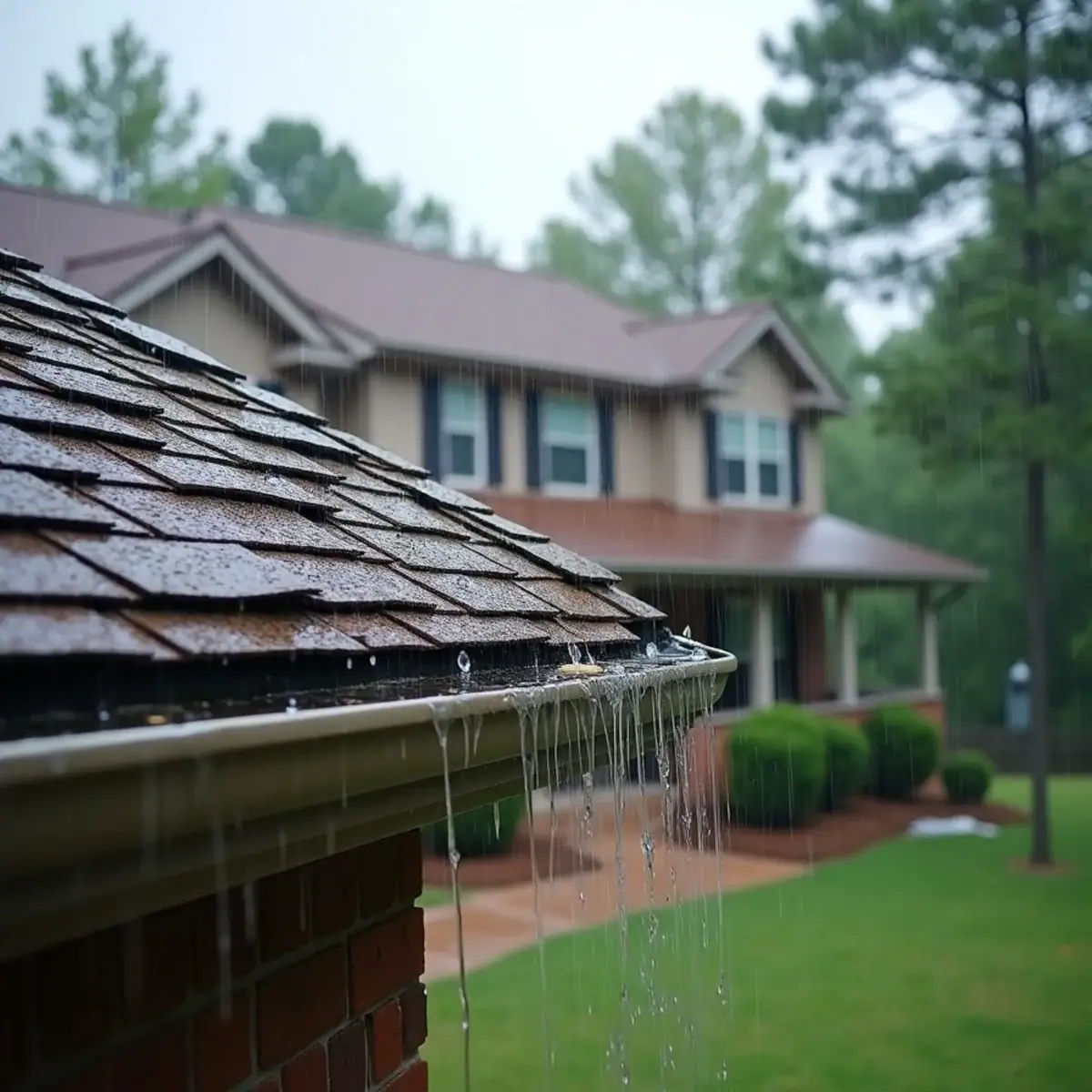
Roof leak repair in Little Rock starts with a plain fact: the stain on your ceiling is where the water landed, not where it got in. Rain that slips past a cracked vent boot can run along a rafter for several feet before it drops onto drywall. With about 50 inches of rain a year, much of it arriving in hard downpours, small openings on Little Rock roofs get found fast, and a dab of roof cement over the wrong spot only moves the drip down the hall.
Little Rock Shingle Roofers answers the phone 24/7 and connects you with an independent licensed roofer who traces the leak, shows you photos of what failed and gives you a written estimate before work starts. If water is pouring in right now, go to emergency roof repair and read what to do when your roof is leaking while you wait. Please stay off a wet roof.
Where shingle roofs leak in Little Rock homes: valleys, pipe boots, flashing and nail pops
The median Little Rock house was built in 1978, so most roofs here are on their second or third set of shingles. The weak points are the places where something interrupts them.
Pipe boots
Every plumbing vent comes through the roof inside a boot with a rubber collar. Summer sun bakes that rubber until it splits, often in 10 to 15 years, and water follows the pipe down into a bathroom ceiling. A leak around a vent pipe is the most common small leak we hear about. See pipe boot leaks in Arkansas.
Valleys
A valley drains two roof planes at once. On the hip-and-valley roofs of west Little Rock and Chenal Valley there can be eight or ten of them, and oak leaves and pine needles settle in every one. A valley leak usually comes from worn or cut shingles, valley metal that stops short, or a debris dam that pushes water sideways. See why roof valleys leak.
Chimney and wall flashing
Chimneys, dormer walls and skylights all need metal flashing woven into the shingles. On pre-war homes in Hillcrest, the Heights and the Quapaw Quarter, the chimney flashing is often the oldest thing on the roof. See roof flashing and chimney leak repair.
Nail pops
A nail that backs out of the deck lifts the shingle above it and eventually pokes through. Each hole is tiny, but a downpour can push a surprising amount of water through it.
Satellite mounts, old antenna holes and attic fans
Anything bolted through the shingles after the roof went on is a suspect. Satellite dish brackets are often lagged through with a dab of sealant, and the bolt holes stay when the dish comes down. Older homes may still have antenna mast holes. Powered attic fans and exhaust caps sit on their own flashing, which loosens over time.
What a roof leak repair visit includes
A leak visit should end with you knowing where the water got in, what it takes to stop it and what it will cost. Here is what to expect from the roofer we send.
- A look inside the house at the stain, the wet spots and any sagging drywall.
- An attic check above and uphill of the stain, wherever the attic can be reached safely.
- A close inspection of the pipe boots, vents, valleys, flashing and shingles upslope of the leak.
- A hose test on one small area at a time when the opening is still hidden.
- Photos of the failed part and the water trail it left, so you see what the roofer saw.
- A written estimate naming the repair, plus anything that could change once shingles are lifted.
- A temporary cover if water is coming in and the permanent fix has to wait, listed as its own line.
How a leak repair goes, from the call to the next hard rain
The leak tracing itself is covered below. These are the steps around it.
- Call any hourSomeone answers 24/7. We ask where the water shows, when it started, whether it comes with every rain or only hard ones, and roughly how old the roof is.
- A licensed roofer comes outWe connect you with an independent licensed roofer who works your part of town. Arrival depends on the hour, the weather and how many calls are open, and nobody climbs in lightning or high wind.
- Find it and show youThe roofer traces the leak, walks you through photos of the cause and hands you a written estimate. Nothing starts until you approve it.
- Fix the sourceThe roofer repairs the failed boot, flashing, valley or shingles and checks the neighboring boots and flashing, since parts that went on the roof together tend to wear out together.
- Check after the next downpourDraw a light pencil line around the old stain. If it stays inside the line through the next few hard rains, the leak is stopped. If it grows, call back so the same spot gets rechecked.
How a roofer traces a leak: attic check, roof walk and water test
Roof leak detection works backward from the stain to the opening. The roofer we send usually goes in this order:
- Questions first. When did the stain appear? Only in hard rain, or in any rain? Did it start after a limb fell or after someone worked on the roof? The answers narrow the search before anyone climbs a ladder.
- Attic check. With a flashlight, the roofer looks for darkened deck boards, damp or flattened insulation, rusty nail tips and water tracks on the rafters, then follows the track uphill to its highest point. An attic leak often gives away its true source here.
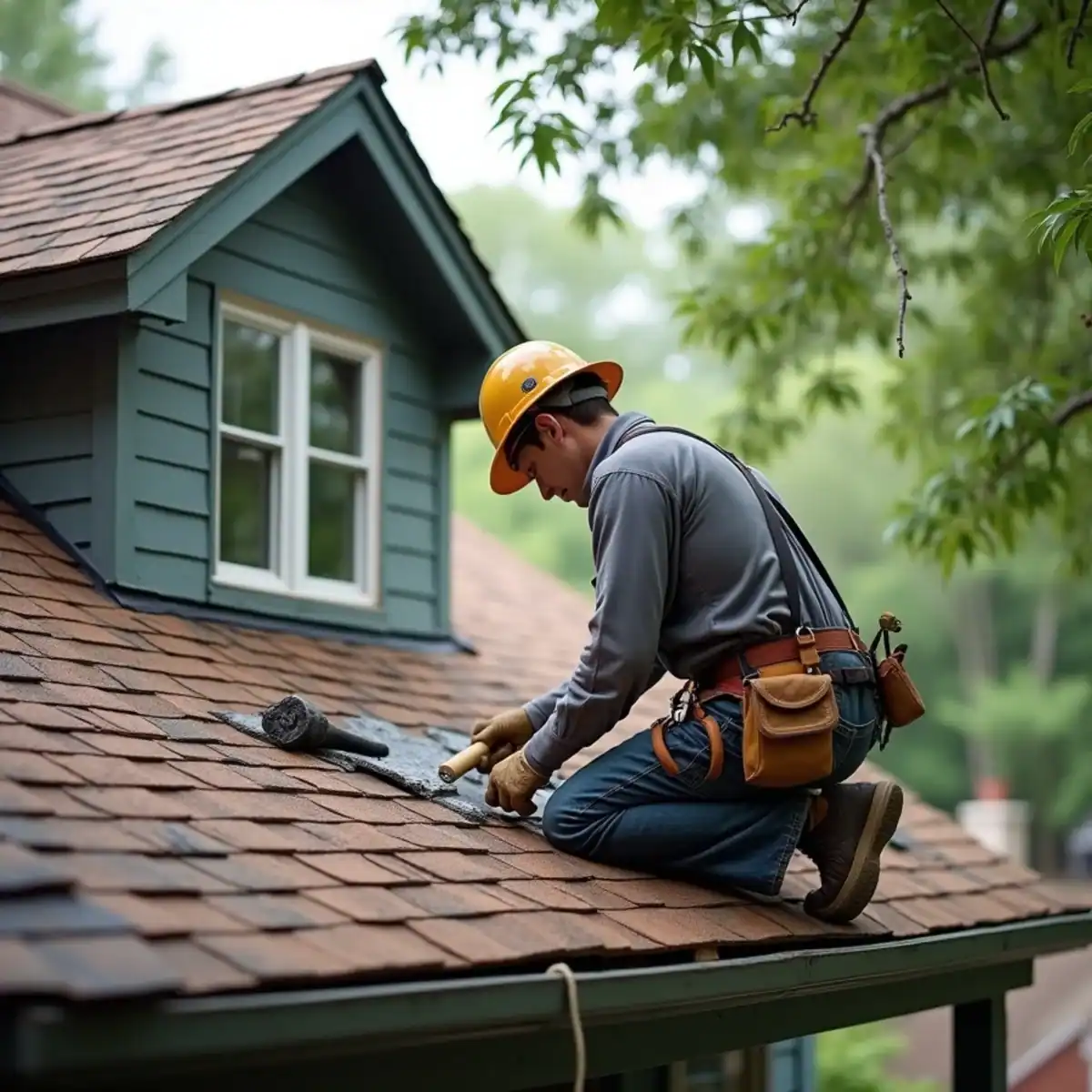
- Roof walk. On the roof, every boot, vent, valley, flashing and skylight curb above the wet area gets a close look, along with any lifted tabs or popped nails.
- Water test. If the source still is not clear, a garden hose runs on one small area at a time, starting low and working uphill, while someone watches from inside. When the drip starts, the opening is found.
A sunny day works fine
A leak can be traced without rain. Stains on the deck show where water has traveled, and the hose test recreates the downpour one section at a time.
Not sure the stain is from the roof at all? Read what causes a water stain on the ceiling. Plumbing drains and attic condensation leave marks that look a lot like a roof leak.

Slow leaks that never drip: warning signs to check before the ceiling stains
Not every leak drips. A small opening can wet the same deck board every rain for a year, and in Little Rock's humid summers that wood dries slowly between storms. These signs show up first:
In the attic
- Rusty nail tips in one cluster, usually near a vent pipe, valley or chimney.
- Dark rings or streaks on the deck boards, or a board that looks darker than the ones beside it.
- Matted or flattened insulation in one patch while the rest stays fluffy.
- Spotty mold on the underside of the deck or a musty smell when you open the attic hatch.
Inside and outside the house
- Paint bubbling where an outside wall meets the ceiling.
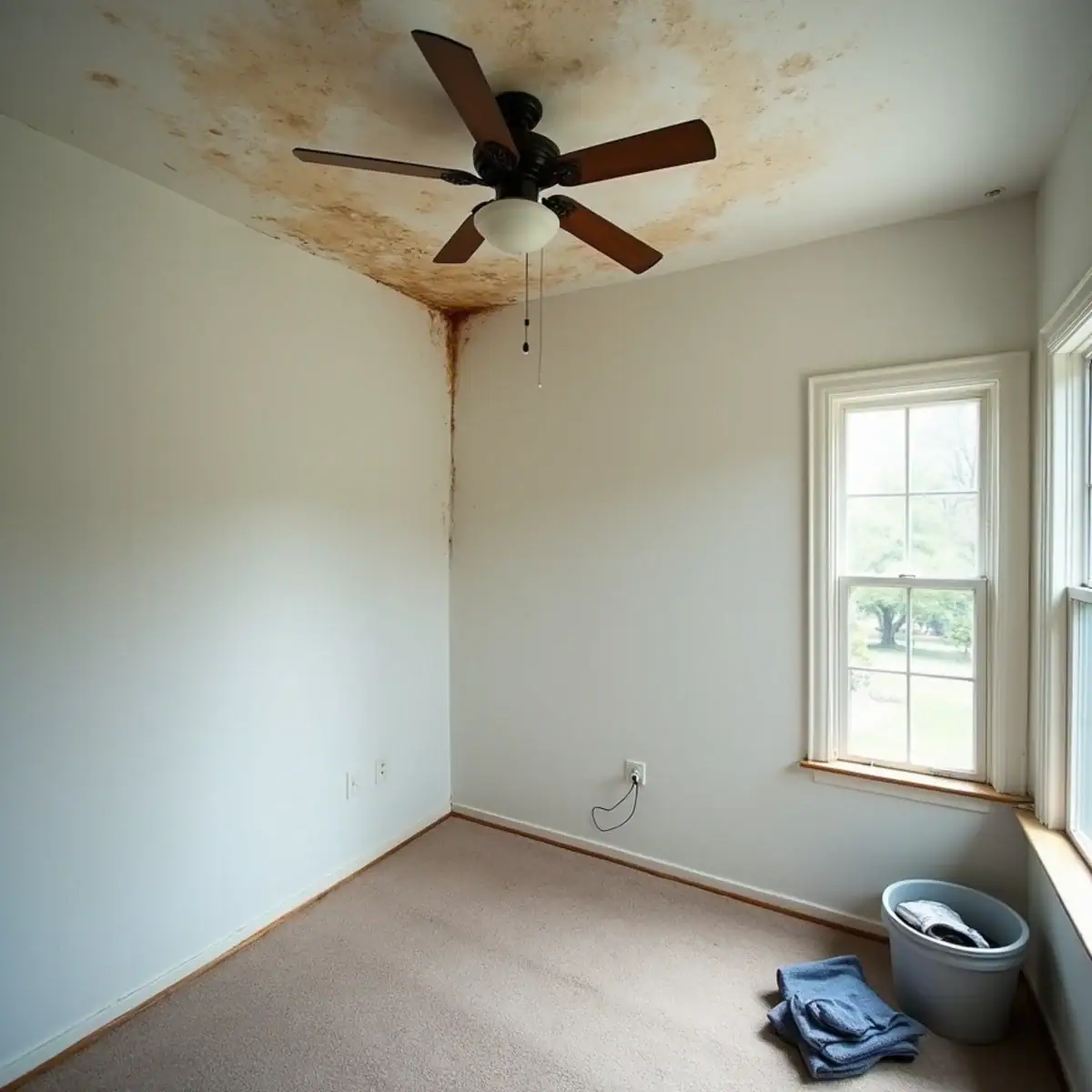
- A faint ring around a ceiling light or fan box.
- Drywall starting to sag between two joists.
Leak or condensation?
Condensation shows up on cold winter mornings as frost or rust on many nails across a whole slope. A leak shows up after rain, in one spot, usually below something that comes through the roof. One points to ventilation, the other to a failed part.
Leak repairs we send roofers for: shingles, underlayment, vents and valleys
Once the opening is found, the fix matches the cause. Smearing roof cement around it is not a repair, and it often hides the problem from the next person who looks.
| What failed | What the roofer usually does |
|---|---|
| Cracked rubber pipe boot | Fits a new boot, tucked under the shingles above it and sealed at the pipe |
| Lifted, cracked or missing shingles | Installs the closest available match, nails it on the correct line and reseals the tabs |
| Popped nails | Removes or resets the nail, seals the old hole and fastens the shingle properly |
| Worn or debris-damaged valley | Clears the valley, renews worn shingles and adds or extends valley metal |
| Torn underlayment under the leak | Lifts the shingles, patches the underlayment and lays the shingles back |
| Loose box vent or ridge vent | Refastens or swaps the vent and seals the shingle laps around it |
Missing tabs and curled shingles have their own page: missing and damaged shingle repair. If the roofer finds soft, dark wood under the leak, that section of deck is handled as roof decking repair before the shingles go back on. These are everyday repairs across our service areas around Little Rock, on everything from 1950s ranch homes to newer two-story houses.
How long a roof leak repair takes, and when it needs a second trip
Finding the leak often takes longer than fixing it. Most single-point repairs are finished on the same visit. Rough times on the roof in dry weather, after the tracing:
| Repair | Usual time |
|---|---|
| New pipe boot | Often under an hour |
| A few shingles or popped nails | Often 1 to 2 hours |
| Step flashing along one wall or one side of a chimney | Often half a day |
| Rebuilding a worn valley | Often half a day to a full day |
| Soft decking found under the leak | Adds a few hours or more, depending on how much |
Why some leaks take two visits
- The shingle has to be found. An older or discontinued color may need to be ordered.
- The roof is still wet. Sealant and adhesive need a dry surface, so a temporary cover may go on first and the lasting fix follows.
- The brick needs a mason. A cracked chimney crown or crumbling mortar is masonry work, done before the roofer reflashes.
- The weather is too hot or too cold. Hot July shingles scuff underfoot, so roofers often work early. In winter, new tabs may not self-seal until warm sun hits them, so the roofer hand-seals them.
The written estimate says why and what each visit covers.
Leaks that only show up in wind-driven rain
Some leaks hide for months. The ceiling stays dry through ordinary showers, then a line of spring thunderstorms comes through with rain blowing sideways, and the stain is back. That pattern points to an opening that only takes water when rain is pushed uphill or across the roof.
- Step flashing at walls and dormers, where one short or missing piece lets water run behind the siding.
- Ridge vents and gable vents, which can take in rain that is driven straight at them.
- Low-slope sections such as a porch roof or a back addition, where gusts push water up under the shingle laps.
- Unsealed shingle tabs that lift in a gust and let rain blow underneath.
- The side of a chimney that faces the weather, where water hits the brick and runs behind loose counterflashing.
Tell the roofer which way the rain was blowing and which rooms got wet. That alone often points to the right side of the house. Our article on why a roof leaks only in heavy rain walks through the usual suspects in more detail.
What to do inside the house while you wait for the roofer
You can limit the damage from inside without going anywhere near the roof.
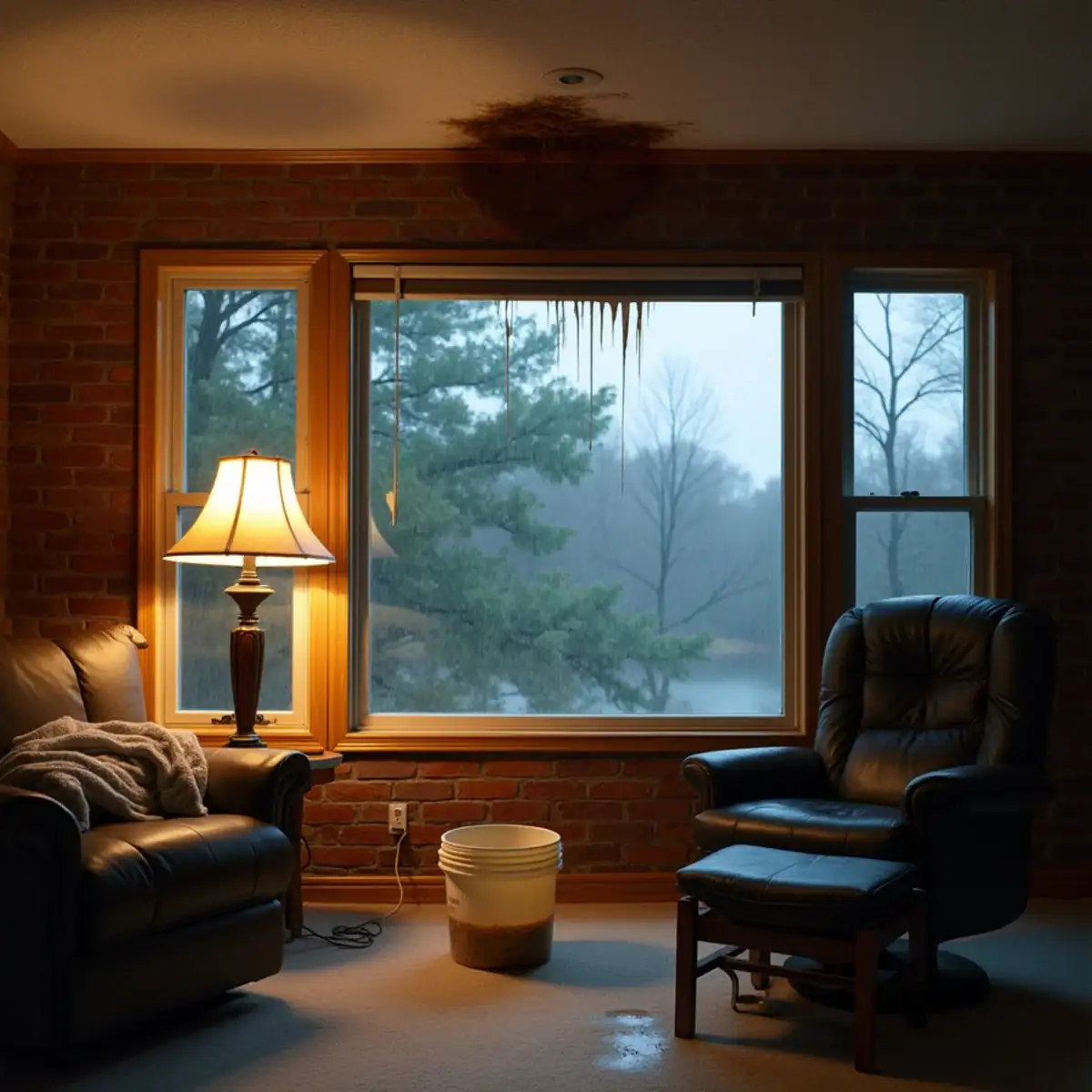
- Catch the water. Set a bucket or trash can under the drip with a towel in the bottom to stop the splash, and move furniture, rugs and electronics out of the way.
- Watch for a ceiling bulge. If drywall sags with trapped water, stand to one side and poke a small hole at the lowest point with a screwdriver, with a bucket underneath. A controlled drain beats the whole panel coming down. If the ceiling is cracking or sagging badly, keep everyone out of the room.
- Mind the electricity. If water is near a light, ceiling fan or outlet, switch that circuit off at the breaker panel, but only if you can reach the panel standing on a dry floor. Never touch a panel while standing in water.
- Take photos. Photograph the stain, the wet spots and the attic if you can see it safely. They help the roofer, and they are worth keeping with your records.
- Stay off the roof. Wet shingles are slick, and many Little Rock roofs are steeper than they look from the yard.
Lightning, high wind and ice
No roofer climbs in lightning, high wind or on ice. We answer 24/7, and the roofer comes as soon as it is safe. If the roof is open, emergency roof tarping keeps water out until the repair.
Repair the leak, or is the roof finished? How to tell
Most leaks we hear about come from a single failed part on a roof that still has life in it. Fixing that part is the right call, and the roofer we send will say so.
Signs a repair makes sense
- One leak point, such as a boot, a valley or a single run of flashing.
- Shingles that lie flat and bend without cracking.
- Granules mostly in place, with no bare patches across the slopes.
- Decking that feels solid underfoot when the roofer walks the roof.
Signs the roof may be near the end
- Leaks in several places at once, on different slopes.
- Shingles that snap when lifted, or curl across whole sections.
- Heavy granule loss, with dark bare spots and grit piling up in the gutters.
- Soft decking in more than one area.
If the evidence points that way, the roofer will show you the photos and explain what they see. A full-roof decision is a separate conversation, and you can still have the active leak fixed first. Hail and insurance questions are handled by our sister site, shingleroofinglittlerockar.link.
What affects the cost of a roof leak repair
Each leak is priced on what the roofer finds, so there is no flat rate. These are the things that move the number:
- What failed. A single pipe boot is a short job. Rebuilding a valley or a run of step flashing takes longer and uses more material.
- Pitch and height. Steep, two-story roofs in Hillcrest and the Heights need harnesses and roof jacks, which adds setup time.
- Access. Oak limbs over the roof, tight driveways and fenced backyards all slow the work.
- Shingle match. Common architectural shingles are easy to find. Older or discontinued lines can take a search.
- Hidden damage. Wet or rotted decking found once the shingles are lifted adds to the scope.
- Timing. A call in the middle of the night during active rain is different work from a scheduled visit on a dry afternoon.
For more on each factor, read what shingle roof repair costs in Little Rock. Whatever the job turns out to be, the roofer gives you a written estimate before work starts.
Why Little Rock homeowners call Little Rock Shingle Roofers about leaks
- A person answers at 2 a.m.Leaks show up in overnight downpours, not during office hours. The phone is answered 24/7, so you can describe the drip while it is happening and get a roofer lined up.
- Licensed and insured in ArkansasEvery roofer we send is licensed and insured in Arkansas. Little Rock Shingle Roofers connects you with independent licensed roofers who perform the work.
- The cause, in photosYou see the cracked boot or the loose flashing on a screen in your driveway, not a vague note that the roof needs work. The written estimate comes before anything starts.
- Fix the leak firstWhen one part failed and the rest of the roof is sound, the roofer recommends the repair. Nobody pushes you toward a bigger job that a single leak does not call for.
Roof Leak Repair questions from Little Rock homeowners
How fast can a roofer get to a leak in Little Rock?
We answer the phone 24 hours a day, 7 days a week, and start lining up a licensed roofer while you are still on the call. How fast the roofer arrives depends on the hour, the weather and how many calls are open, so we don't promise a set time. Roofers do not climb in lightning, high wind or on ice. If a storm is still overhead, the visit happens once it passes.
Can a roof leak be fixed while it is still raining?
No, not permanently. Shingle sealant and flashing need a dry surface to bond, and a wet roof is dangerous to walk. In steady rain with no lightning, a roofer may be able to set a tarp or temporary cover to slow the water, or catch the drip from the attic. The lasting repair follows once the roof has dried out.
Why does my roof leak only during heavy rain?
Because some openings only take water when there is a lot of it, or when it is moving sideways. A short step flashing, an unsealed shingle tab, a valley that overflows its metal or a ridge vent facing the wind can stay dry in light rain and leak in a downpour. Noting which way the rain blew helps the roofer find it. See our guide to heavy-rain leaks.
Is the roofer who fixes my leak licensed and insured in Arkansas?
Yes, they are. Every roofer we send is licensed and insured in Arkansas. Little Rock Shingle Roofers connects you with independent licensed roofers who perform the work. The roofer who comes to your home inspects the leak, explains the repair, gives you the written estimate and does only the work you approve.
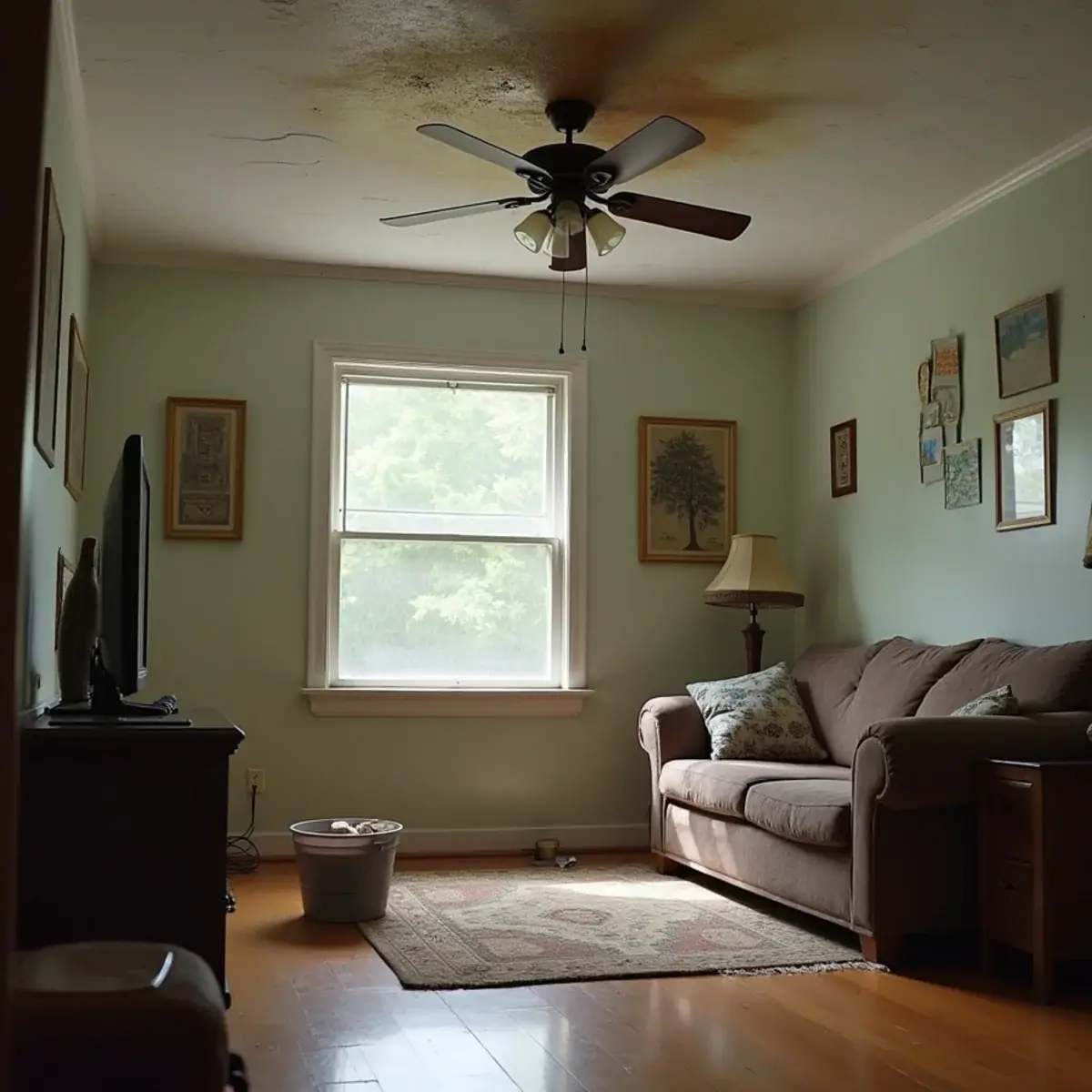
Is a brown ceiling stain always a roof leak?
No. In Little Rock homes a stain can also come from a bathroom drain, a sweating AC duct, a clogged air handler drain line in the attic, or a bath fan that vents into the attic instead of outside. A stain that appears on dry days points away from the roof. The roofer checks the attic first and tells you which it is. More in our ceiling stain guide.
Do you handle roof leaks on rental homes in Little Rock?
Yes. About 46% of Little Rock households rent, so landlords and property managers call us regularly. A licensed roofer can meet your tenant or use a lockbox, trace the leak, and send you photos and a written estimate to approve before any work starts, even if you live out of town. Our landlord roof leak checklist covers what to ask tenants.
Will roof cement or caulk stop my roof leak?
No, not for long. Roof cement sits on top of the shingles, while most leaks run underneath them at a boot, a flashing joint or a lifted lap. Arkansas sun dries the patch until it cracks and pulls away. It can slow water for a short time; the lasting fix replaces the part that failed.
Can a roof leak be fixed from inside the attic?
No, not permanently. From the attic you can catch the water with a bucket or a sheet of plastic and keep it off the drywall, but the opening is on the outside. Sealant pushed into the deck from below does nothing about the cracked boot or loose flashing letting water in.
Is a musty smell in the attic a sign of a roof leak?
Not always. It can come from a slow leak, or from condensation and a bath fan venting into the attic. If the smell is strongest near a vent pipe, valley or chimney, with dark stains or rusty nails there, a leak is likely. The roofer checks the attic and tells you which it is.
Page reviewed by Little Rock Shingle Roofers.