Quick answer
Move people and belongings away from the drip, set buckets under it, and switch off the breaker for any wet light or outlet. If the ceiling sags, drain it through a small hole into a bucket. Take photos, stay off the roof, and call so a licensed roofer is lined up as soon as it is safe.
Here is what to do when your roof is leaking: get people and valuables out from under the drip, catch the water, cut power to anything wet, and stay off the roof. If the ceiling is bulging, drain it on purpose before it tears open. Then take photos and call for a roofer. Your job tonight is damage control from the inside. Patching the roof itself waits until it is dry, calm and light enough for a roofer to walk it safely.
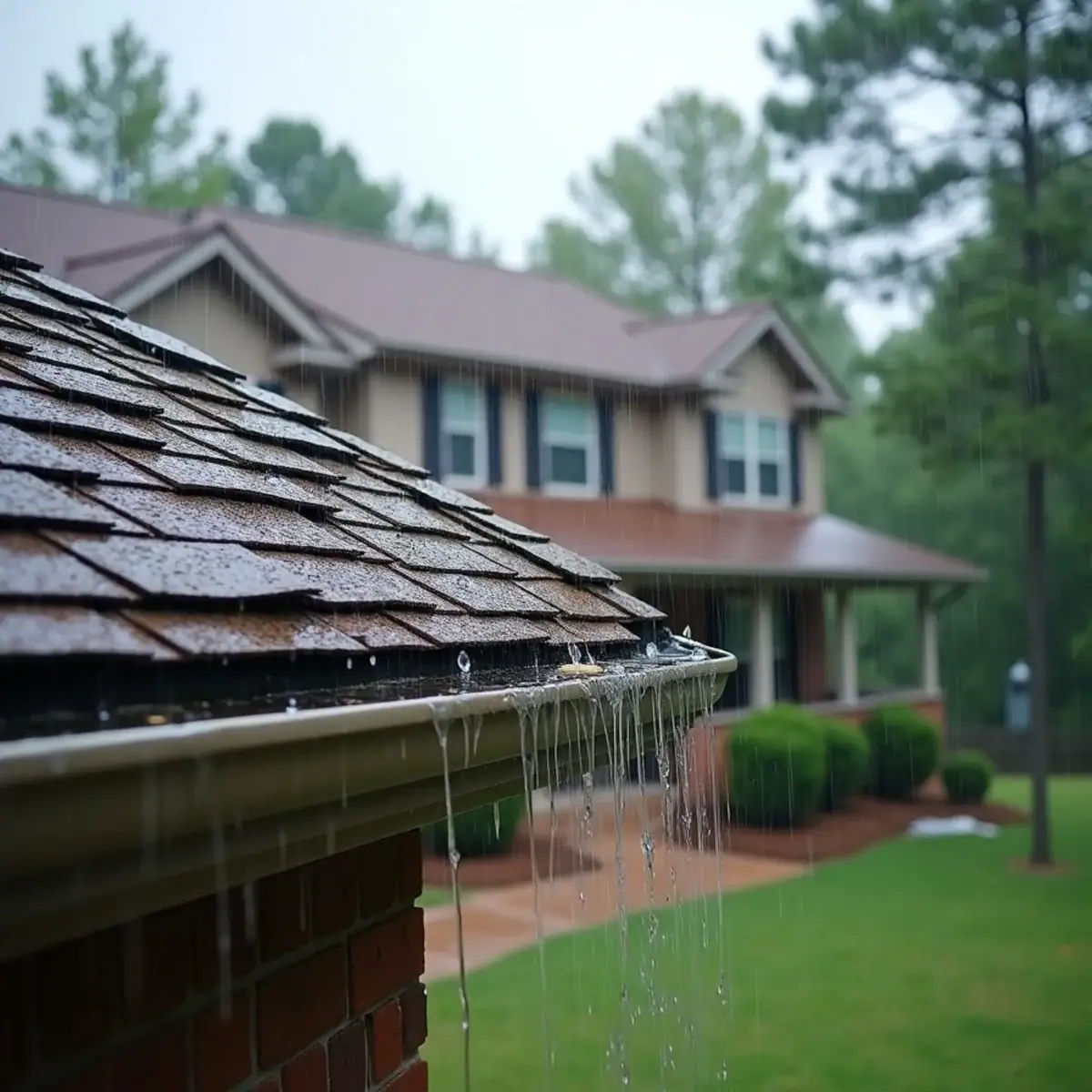
Little Rock gets about 50 inches of rain a year, and much of it falls in hard downpours that find the one tired spot on a roof. With a median house age around 1978, a lot of homes here are on their second or third set of shingles, so the calls come in every time a heavy band of rain rolls through.
The first 15 minutes: what to do when your roof is leaking
- Clear the area. Move electronics, rugs, furniture, papers and anything with sentimental value out from under the leak. Pull beds and couches toward the middle of the room.
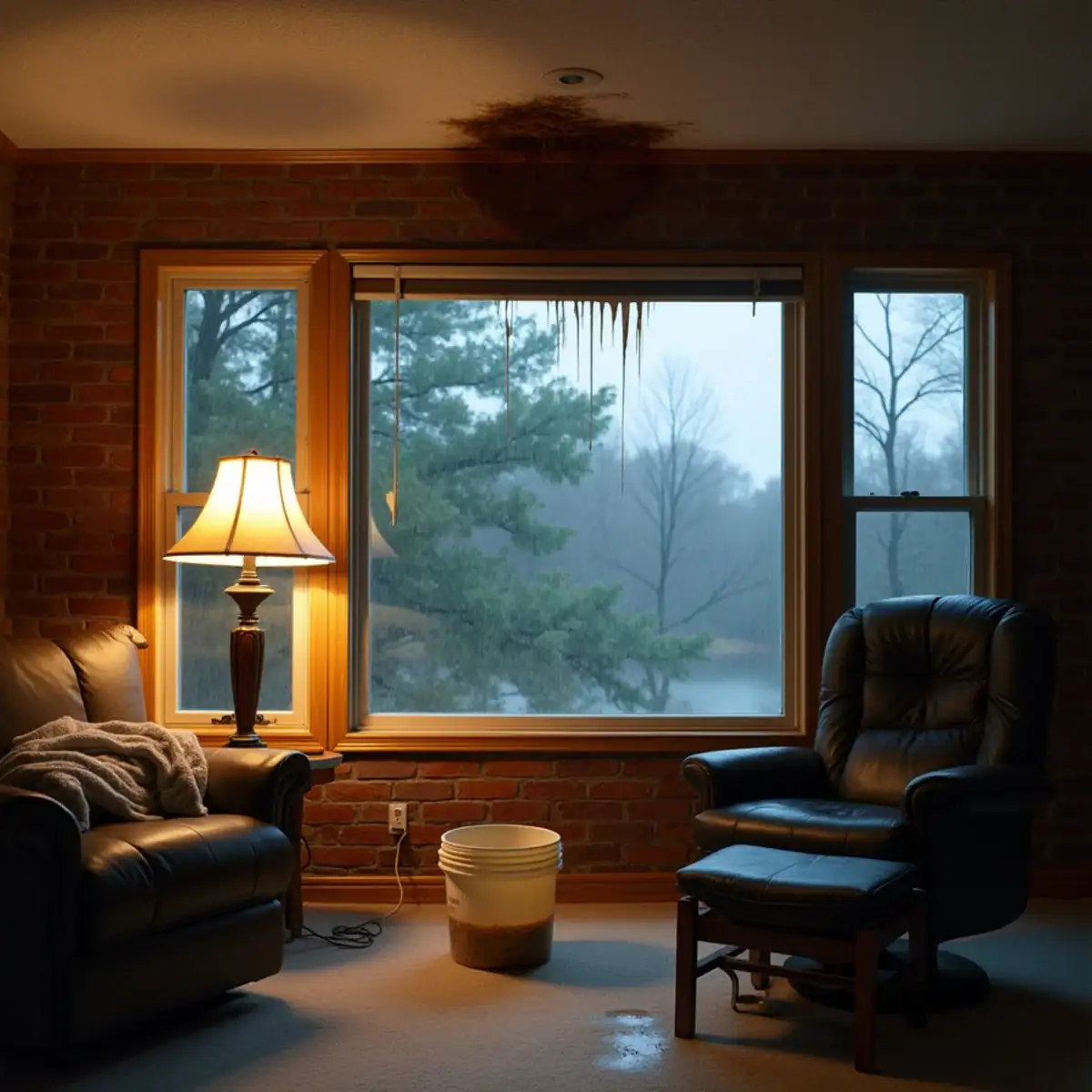
- Catch the water. Buckets, stock pots and plastic storage bins all work. Put a towel or an old sheet under each one so splashing water does not soak the floor around it.
- Look up. A flat brown stain is one thing. A ceiling that sags, bubbles or holds a belly of water needs the steps in the next section right away.
- Kill power to wet fixtures. If water is near a light, ceiling fan or outlet, switch off that circuit at the breaker panel, but only while you are standing on a dry floor.
- Check the attic if it is safe. In a floored, lit attic with no wet wiring, set a bucket or a sheet of plastic on top of the insulation under the drip. Step only on joists or decking.
- Take photos and call. Get a few pictures and a short video, then call so you are in line for a roofer the moment the weather allows.
Water coming through the ceiling: drain it before it drops
A sagging spot means water is sitting on top of the drywall. Drywall soaked from above loses its strength, and a pocket of water can bring down a section of ceiling, wet insulation and all, with very little warning. Letting it out in a controlled way is the safer choice.
- Confirm power to any fixture in that part of the ceiling is off.
- Set a large bin or trash can directly under the lowest point of the sag.
- Stand to one side and poke a small hole at the lowest point with a screwdriver.
- Let it drain, widen the hole a little if it is slow, and keep emptying the bin.
If the ceiling is cracking, leave the room
Wide sagging, cracks running across the drywall, or a ceiling pulling away from the wall means it could come down. Close the door and keep kids and pets out. Drywall is cheap to patch. Nobody should be standing under it.
How do you keep a drip under control until the rain stops?
Once the buckets are out, a few household tricks keep the mess small through the night.
- Give the water a string to follow. Push a thumbtack into the ceiling right beside the drip, tie on a piece of string and let the other end hang into the bucket. Water runs down the string instead of splashing. A strip of cotton rag works if there is no string.
- Put a rag in the bottom. An old T-shirt in the bucket cuts the splash and the noise.
- Size up for overnight. A drip that fills a bowl by bedtime will overflow a bucket by morning. Use a trash can and set an alarm to check it once.
- Catch it higher up. In the attic, lay a scrap of plywood across two joists under the drip and set a shallow bin or roasting pan on it. It keeps the water out of the insulation.
Water held in the decking can keep dripping after the sky clears, so leave the buckets for a while. Drying the attic and drywall comes next, and our emergency roof repair page covers it.
Stay off the roof, and why the roofer may wait too
Climbing up with a tarp in the rain is how homeowners end up in the emergency room. Wet shingles are slick, moss and pine needles make them worse, and a ladder leaned on a full gutter can slide sideways. Steep pre-war roofs in Hillcrest and the Heights are hard to stand on even when they are dry.
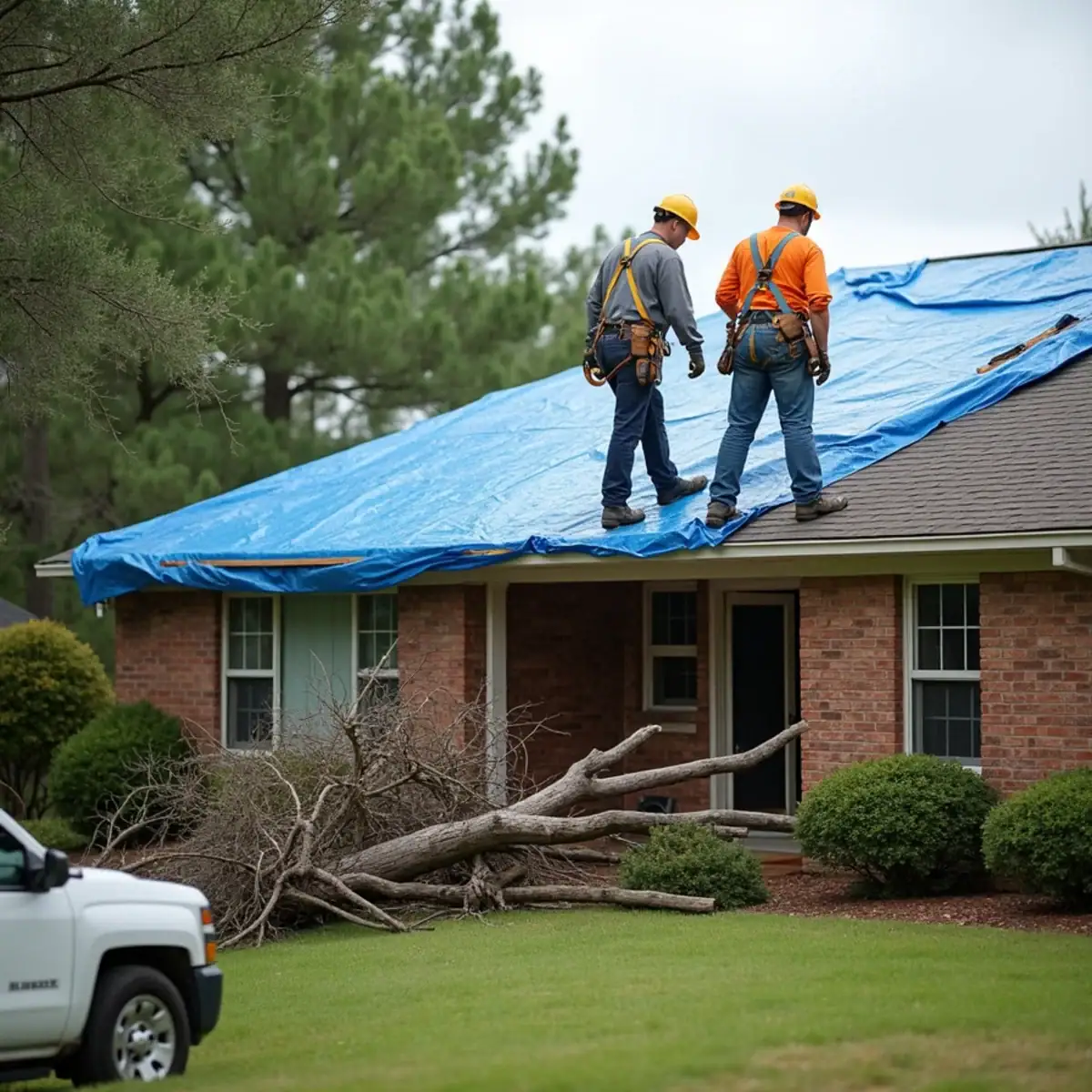
Roofers follow the same rules. Nobody climbs in lightning, high wind or on ice. The phone is answered 24/7, and how fast a roofer gets to you depends on the hour, the weather and how many calls are open across town. Once the lightning moves off and the wind settles, the first visit is about stopping the water with a tarp or a temporary seal. Our emergency roof repair page explains how those night and weekend visits work. If you are thinking about tarping it yourself after the rain stops, read how to tarp a leaking roof safely first.
Where the water is probably getting in on Little Rock roofs
Most leaks on Central Arkansas shingle roofs start at a short list of places. Knowing them helps you describe the problem when you call.
- Pipe boots. The rubber collar around a plumbing vent dries out and cracks after years of Arkansas sun. A cracked boot often lets water run straight down the pipe into a bathroom or hallway ceiling.
- Chimney flashing. Older masonry chimneys in Hillcrest, the Heights and the Quapaw Quarter often have flashing that has been caulked over many times instead of rebuilt.
- Valleys. Oak leaves and pine needles pile up where two roof slopes meet, especially on the hip-and-valley roofs common in west Little Rock. In a downpour the water backs up under the shingle edges.
- Missing or lifted shingles. A tab torn off by a gust or a shingle pushed up by a backed-out nail leaves the underlayment exposed.
- Limb strikes. A broken oak or pine limb can puncture shingles and decking in one hit.
The same pattern shows up across the river. Park Hill's older homes and mid-century Lakewood sit under big oaks with masonry chimneys, so roof leak repair in North Little Rock is mostly flashing, valleys and limb damage.
How can you trace the leak from the attic while it is raining?
During the rain the water trail is wet and shiny instead of a faded stain, so a few minutes in a safe attic can save the roofer a lot of hunting later.
Before you go up
- Step only on joists or flooring. A foot between joists goes through the ceiling.
- Use a headlamp, not a corded work light in damp insulation.
- Stay out if water is reaching wiring or a light fixture.
Follow the water uphill
- Find the wet patch on the insulation above the stain.
- Follow the darker, wet wood uphill along the rafter or decking to the highest wet point. That is closest to where water enters.
- Mark it with tape, photograph it and note what is nearby: a vent pipe, chimney or valley.
- Measure from the mark to the nearest gable wall and down from the ridge so the roofer can find the spot outside.
Don't push a nail up through the decking, which adds a hole, or spray foam on the underside, which hides the trail. If the mark lands on a vent pipe or chimney, the fix is usually pipe boot and flashing repair, not new shingles.
Photos, notes and what to tell the person who answers
A few minutes of notes now saves time later, because the drip may stop when the rain does and the evidence dries up with it.
- Photograph the stain, the drip, any wet floors and damaged belongings, then take a wide shot of each room.
- Write down when it started, how hard it was raining and which way the wind was blowing.
- Note whether the leak started right away or an hour into the rain. That timing points the roofer toward different parts of the roof.
- Keep receipts for buckets, fans and a dehumidifier for your records or your insurer.
What roofers see on Little Rock roofs
The stain on the ceiling is rarely under the hole in the roof. Water hits the decking, runs downhill along the underside of the wood or along a rafter, and drops wherever it finds a low point. A drip in the middle of a bedroom ceiling can trace back to a pipe boot six or eight feet uphill.
That is why the roofer we send usually starts in the attic, not on the roof. Dark trails on the decking, rusty nail tips and a crusty ring on the insulation show the path. In Little Rock's humid summers, wet insulation also holds water against the drywall for days, so a stain can keep spreading after the rain stops. Pulling soaked insulation back and running a fan does more than people expect.
One more pattern: leaks that only show up in the heaviest rain are often valleys or step flashing being overrun, not a hole. Our post on why roofs leak only in heavy rain walks through those causes.
Quick answers
Can a roofer fix a leak while it is still raining?
No, not permanently. In light rain with no lightning and calm wind, a roofer can often put a tarp or temporary seal over the problem. Shingles, sealant and underlayment need a dry surface to bond, so the real repair waits for the roof to dry out. Nobody, homeowner or roofer, should be on a roof during lightning or high wind.
Should I poke a hole in a bulging ceiling?
Yes, if the bulge is holding water and the ceiling is not cracking. Turn off power to nearby fixtures, put a big bin under the lowest point, stand to the side and make a small hole with a screwdriver. A controlled drain is far better than the drywall giving way. If the ceiling is cracking or sagging over a wide area, leave the room instead.
Is a roof leak an emergency if the drip is small?
Not always, but it should not wait long. A slow drip can soak insulation, rot decking and feed mold in a humid Little Rock attic over a few weeks, even if the ceiling looks fine. If water is near wiring, the ceiling is sagging or the leak is getting faster, treat it as an emergency and call right away.
Can I seal the leak from inside the attic?
No, not in a way that lasts. Water usually gets in higher up and runs along the decking before it drips, so caulk or tape on the underside rarely stops it. What helps from the attic is catching the water with a bucket or plastic sheet on the insulation. The fix belongs on the outside of the roof.
Could a ceiling drip be plumbing instead of the roof?
Yes. A drip on a dry day, after an upstairs shower or under an attic air handler points to a plumber or HVAC technician, not a roofer. A leak that starts with the rain usually is the roof. See what causes ceiling water stains for simple tests.
Get the leak found before the next downpour
While it is raining, your work is inside: buckets, a drained ceiling, the breaker off and a few photos. The roofer's work starts once the roof is safe to walk. The first visit stops the water, and the permanent fix comes with a written estimate before any work starts. Every roofer we send is licensed and insured in Arkansas. If water is coming in now, or the drip stopped and you want the source found before it rains again, call (773) 207-0769. We are answering 24/7 and can line up roof leak repair anywhere around Little Rock.