Quick answer
Pipe boots leak in Arkansas because the rubber collar sealing the plumbing vent dries out, shrinks and cracks under years of heat and sun, often within 10 to 15 years, while the shingles around it still have life left. Rain then runs down the pipe into the attic. The lasting fix is a new boot, not a bead of caulk.
A pipe boot leak happens when the rubber collar around a plumbing vent pipe cracks or pulls away, letting rain run down the outside of the pipe and into the attic. In Arkansas the usual cause is heat and sun. The rubber dries out, shrinks and splits, often after 10 to 15 years, while the shingles around it still have years left. The fix that lasts is a new boot.
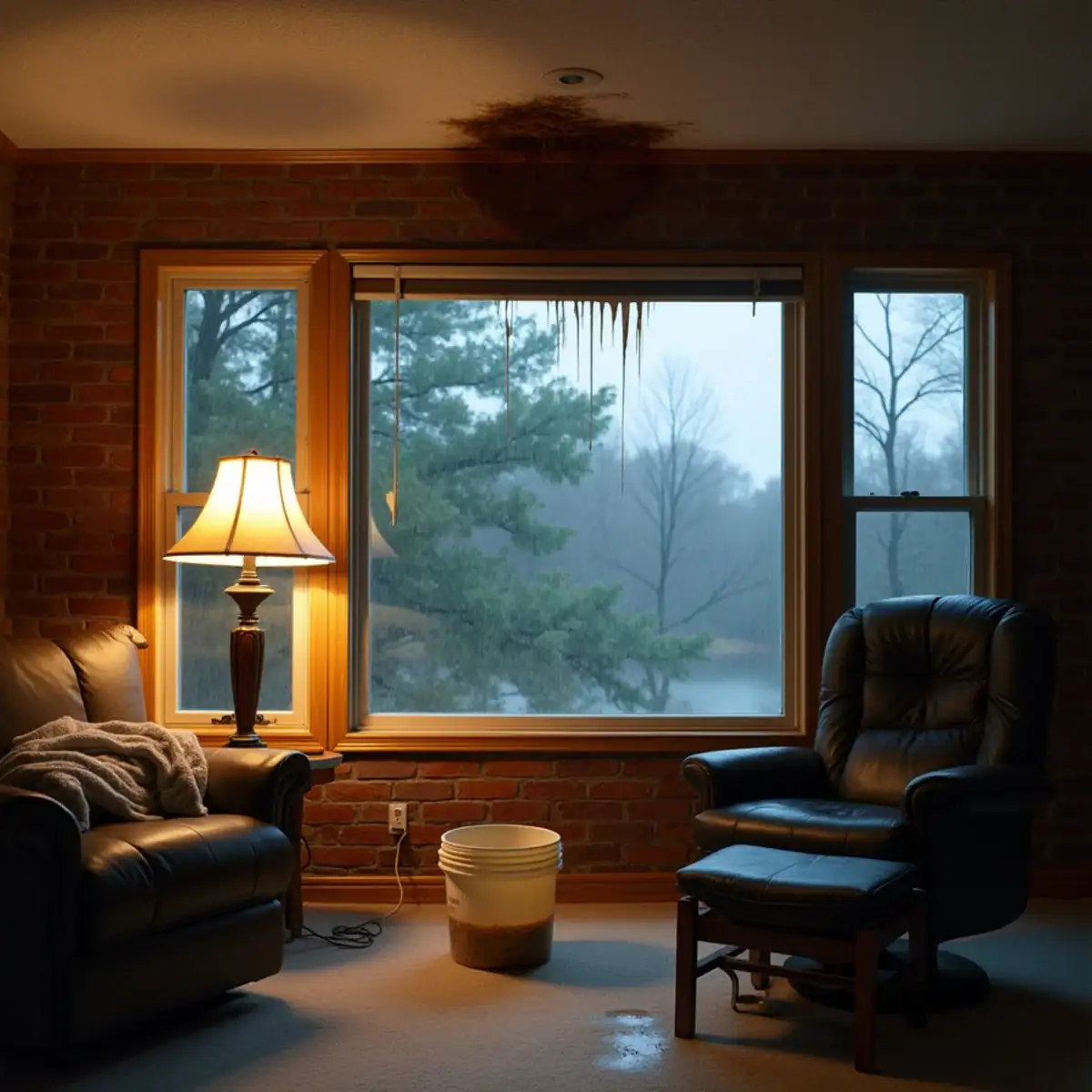
Most houses have two to four pipes through the roof, and each one has a boot. With a median house age in Little Rock dating to 1978, most roofs here are on their second or third set of shingles, and a cracked boot is one of the most common small leaks roofers trace on them. Because the leak runs down an interior pipe, the stain often appears in the middle of the house, which fools a lot of homeowners into calling a plumber first.
What a pipe boot does
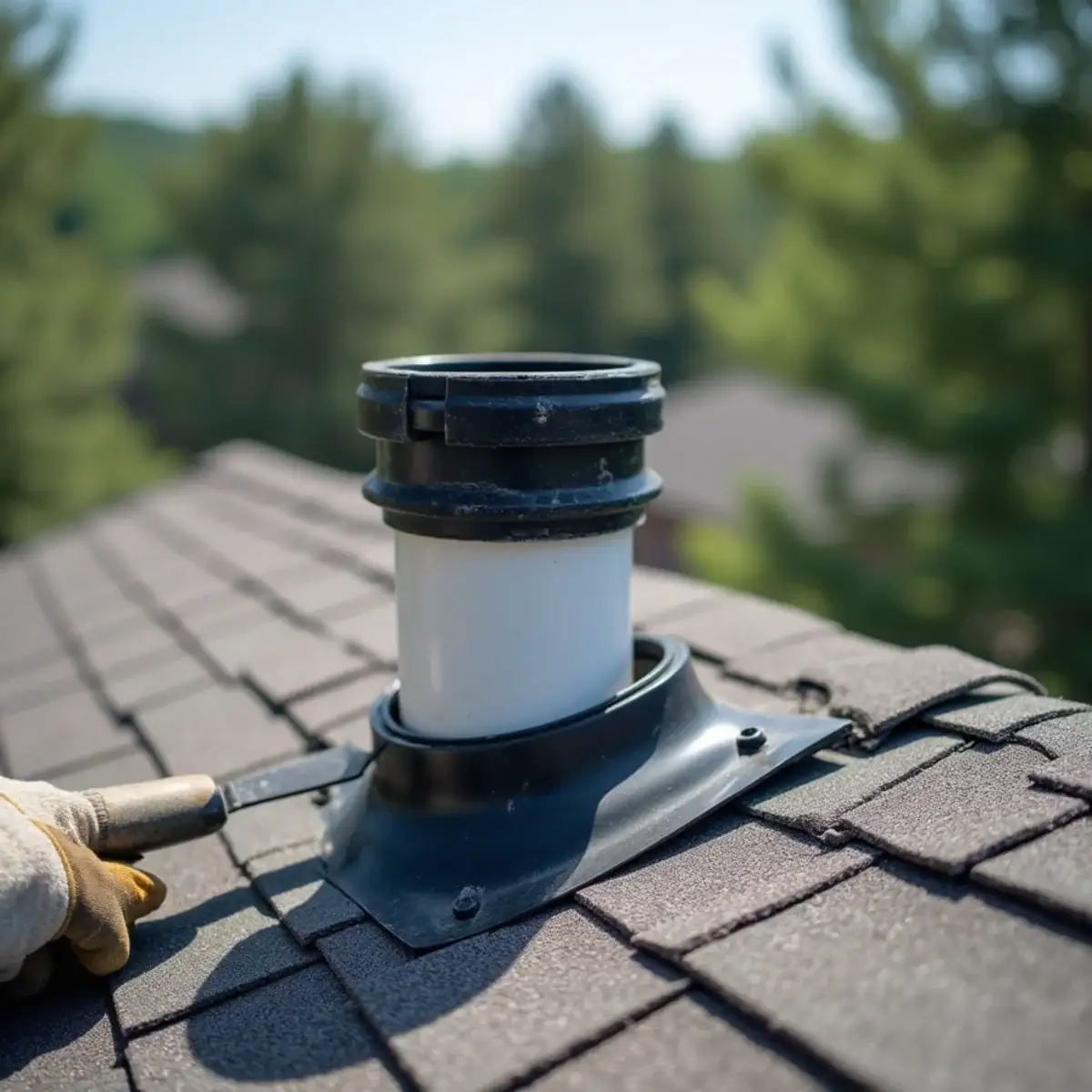
A pipe boot is the flashing for a plumbing vent. It has two parts: a flat base flange, usually metal or plastic, and a rubber collar that hugs the pipe. The top half of the flange slides under the shingles above the pipe and the bottom half sits on top of the shingles below, so water running down the roof flows over it. The collar stops rain from slipping down the gap between the pipe and the hole in the decking.
Older homes, including many pre-war houses in Hillcrest and the Heights, may have lead boots instead: a soft lead sleeve folded down over the top of the pipe. Lead outlasts rubber in the sun, though it has weak points of its own.
Why the rubber collar fails in Arkansas heat
On a July afternoon in Central Arkansas, a dark shingle roof can climb past 150 degrees, then cool off overnight. The rubber collar sits right in that sun, swelling and shrinking day after day for years. Ultraviolet light breaks it down from the surface in. Eventually it hardens, turns gray and splits, usually at the top where it grips the pipe or along the fold where it meets the base.
Other ways boots fail
- Plastic bases crack on some builder-grade boots, even when the collar still looks fine.
- Nails at the top of the flange back out and lift the shingles above, opening a path for water.
- Squirrels chew lead boots, which is common in neighborhoods full of mature oaks and pines.
- The boot was installed wrong, with the top of the flange laid over the shingles instead of tucked under them.
This is why boots fail before the roof does. Plenty of 15 to 20 year old roofs have sound shingles and three cracked boots.
Signs of a leaking pipe boot
- A ceiling stain near an interior wall, often by a bathroom, the kitchen or the laundry room
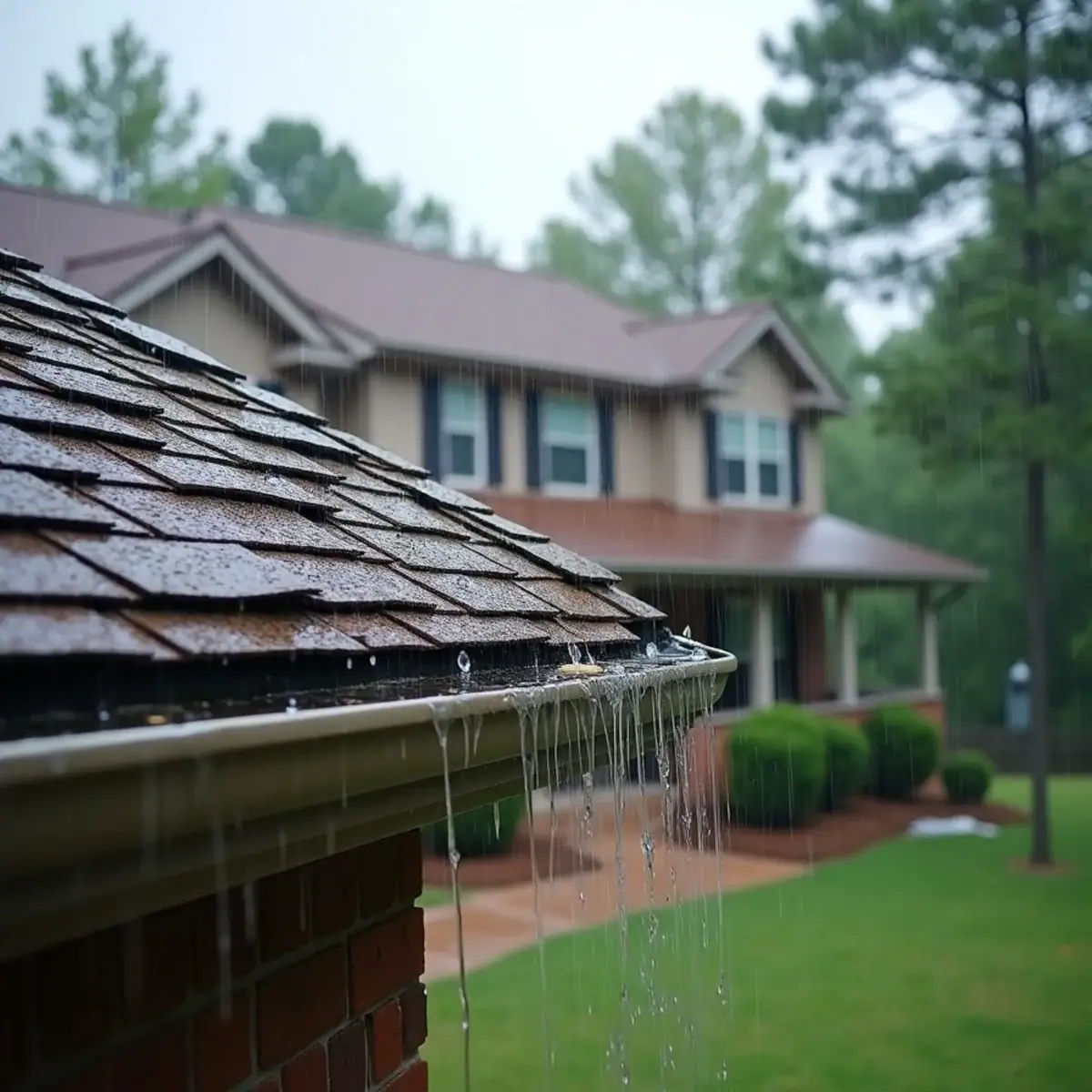
- A stain that grows in any steady rain, not just wind-driven rain
- In the attic, a wet trail running down the vent pipe, or stained wood around the hole in the decking
- Damp or flattened insulation at the base of the pipe
- From the ground with binoculars, rubber that looks gray, cracked or shrunken away from the pipe
Because the stain sits under a bathroom so often, people assume plumbing. A quick check in the attic during or after rain usually settles it. Our guide to telling a roof leak from plumbing or condensation walks through the tests. If the trail runs down the vent pipe, it is the boot, and a roof leak repair visit should confirm it in minutes.
Is it the plumbing vent or another pipe on the roof?
Not every roof pipe is a plumbing vent, and the fix depends on which one leaks. A plumbing vent is plain plastic, open at the top, with no heat, and that is the pipe a rubber boot is made for. Two look-alikes:
- Gas appliance flue (B-vent). A gray metal pipe venting the furnace or gas water heater. It runs hot, so it gets a metal flashing cone and a sealed storm collar, not a rubber boot, and its leaks show near the furnace or water heater.
- Bath and kitchen exhaust caps. A low hood on its own flashing. A stain at a bath fan grille can be the cap, or fan air condensing in a cold duct.
One more clue: water past a cracked boot can follow the vent pipe down inside a wall and show as a stain low on the wall, a damp baseboard or a mark on the ceiling below, sending people after upstairs plumbing that is fine.
How a roofer fixes a leaking boot
- Break the seal on the shingles above the pipe and lift them carefully.
- Pull the nails holding the old boot and slide it off the pipe.
- Check the decking around the hole for soft or rotted wood.
- Slide the new boot down the pipe, tuck the top of the flange under the shingles above, and lay the bottom over the shingles below.
- Nail and seal the flange, then press the lifted shingles back down and reseal them.
| Option | What it is | When it makes sense |
|---|---|---|
| New rubber boot | A standard boot with a fresh collar | Most leaks on most roofs |
| Metal base with a longer-life collar | A sturdier base with a collar made to hold up better in the sun | Roofs with years of life left, to avoid repeat failures |
| Lead or copper boot | A metal sleeve dressed over the pipe | Older homes, or owners who want a very long-lasting boot |
| Slip-over collar | A rubber sleeve fitted over a cracked collar | A short-term patch when the base flange is still sound |
| Caulk or tape | Sealant smeared over the crack | Only to slow a drip until a roofer can come |
Boots are part of the roof's flashing, so the work is covered under roof flashing and pipe boot repair. The roofer gives a written estimate first, and it usually depends on how many pipes need boots, the pitch of the roof and whether any decking needs attention.
Which replacement boot holds up best in Arkansas sun?
Most boots on Little Rock roofs are the standard kind: a metal or plastic base with a neoprene or EPDM rubber collar, cheap, quick to fit and first to crack. When they come off, ask what goes back on.
- Rubber collar on a metal base. Fine for most roofs, and it avoids the cracked plastic flanges of some builder-grade boots.
- Silicone collar. Stays flexible in sun longer than standard rubber, so it commonly outlasts it on a hot south or west slope.
- Lead sleeve. Dressed over the pipe and turned down inside the top, with no rubber to crack. Squirrels chew lead, though, so under heavy oak cover a silicone boot may be the better pick.
- Split or slip-over retrofit boot. Fitted over the old boot without unlacing the shingles. It suits a sound old base with shingles too brittle to lift.
A retrofit hides the wood around the hole, so if the attic shows a wet trail or dark decking at the pipe, the old boot comes off and soft wood gets roof decking repair first.
Subdivision roofs at boot age: Sherwood and Bryant
Two suburbs show the pattern clearly. Sherwood grew subdivision by subdivision from the 1970s through the 2000s, so most of its roofs are on their second set of shingles, and the boots from that last reroof are now reaching the age when they crack. Pipe boot repair in Sherwood is one of the most common calls from there.
Bryant grew fast after 2000, and many homes still have their original builder-grade roofs at 15 to 25 years old. The first leak on those houses is very often a boot. If you live in one of those neighborhoods, a look at your boots with binoculars is worth five minutes, and the roofers we send in Bryant can check the rest.
Check every pipe once the ladder is up
When one boot cracks, the others on the same roof are usually the same age and not far behind. Roofers around Little Rock commonly suggest doing every boot in one visit rather than coming back for the next leak in a year. While they are up there, it is worth checking the other roof penetrations too: the metal flue pipe for the furnace or water heater and its collar, bath and kitchen exhaust caps, and any attic vents.
A ring of caulk or roofing cement around the top of a boot is a sign someone already patched it. That patch usually means the collar underneath is cracked, and it should be replaced, not caulked again. Also watch for a vent pipe cut too short. If only an inch or two of pipe sticks above the boot, there is not enough length for the collar to grip, and the plumbing vent may need extending before the new boot goes on.
Quick answers
How long do rubber pipe boots last in Arkansas?
Rubber pipe boots often crack in 10 to 15 years in Central Arkansas sun, and builder-grade boots with plastic bases can fail sooner. That is usually shorter than the life of the shingles around them, so a roof can be in good shape overall and still leak at the boots. Lead and metal-based boots with tougher collars commonly last longer when they are installed correctly.
Can I just caulk a cracked pipe boot?
No, caulk is only a stopgap. The rubber under it keeps shrinking and cracking in the heat, and the sealant dries out and pulls away within a season or two. Caulk also hides the crack from the next person who looks. If water is coming in now, a little sealant can slow it down, but plan on having the boot replaced with a new one.
Is a leaking pipe boot an emergency?
Not always. A slow drip during heavy rain is not usually an emergency, but it should be fixed soon, because the water soaks attic insulation and can rot the decking around the pipe over a few seasons. Treat it as urgent if water is reaching a light fixture, the ceiling is sagging, or the stain grows quickly with each rain.
Do I need new shingles to fix a pipe boot?
No, in most cases the existing shingles are lifted, the old boot is pulled and a new one slides into place, and the same shingles are pressed back down and resealed. A shingle or two may need replacing if they crack while being lifted, which is more likely on an older, brittle roof or in cold weather. The roofer should mention that before starting.
What size pipe boot does a plumbing vent need?
One that matches the pipe's outside diameter, usually 1.5, 2 or 3 inches and often printed on the plastic. Some boots cover a range with a collar trimmed to fit. A collar stretched too tight or sitting loose leaks early, so the roofer checks each pipe first.
A small part with a simple fix
In Arkansas heat, a rubber pipe boot is often the first part of a shingle roof to fail, and the leak it causes can look like a plumbing problem from below. Caught early, it is a small repair that keeps water out of the insulation and decking. If you suspect a pipe boot leak, call Little Rock Shingle Roofers at (773) 207-0769. We answer 24/7 and send a licensed roofer who gives you a written estimate before any work starts.