Quick answer
A roof that leaks only in heavy rain usually has a weak spot that sheds normal rain but gets overrun by volume or pushed by wind. The usual causes are clogged valleys, step flashing at walls, cracked pipe boots, chimney flashing, backed-up gutters, lifted shingles and low-slope tie-ins. A roofer finds the one that matches your leak.
If your roof leaks only in heavy rain, the roof almost always has a weak spot that holds up to ordinary showers but fails when there is too much water at once, or wind driving it sideways. Valleys overflow, gutters back up, and gusts push rain behind step flashing and under lifted shingle edges. The leak stops when the rain eases, and the roof looks fine from the yard the next morning. That does not mean it fixed itself. It means the gap only opens under pressure.
Central Arkansas is built to expose these leaks. Little Rock averages about 50 inches of rain a year, and a lot of it arrives in short, hard bursts that dump more water on a roof in an hour than a week of drizzle.
Why a roof can stay dry in light rain and leak in a downpour
Shingles shed water by overlapping. As long as water runs straight down the slope, small flaws stay dry because nothing pushes water uphill or sideways into them. Heavy rain changes that in three ways: water piles up in valleys and gutters faster than it drains, wind pushes it across the slope, and splashing water hits joints from angles they were never meant to handle. An intermittent roof leak is often just a small defect waiting for the right rain.
7 causes of roof leaks in heavy rain
1. Valleys clogged with leaves and needles
A valley collects water from two slopes. Pack it with oak leaves or pine needles and it turns into a dam, so a hard rain backs up and runs under the shingle edges along the valley. This is one of the most common hard-rain leaks under Little Rock's tree canopy.

2. Wind-driven rain behind step flashing
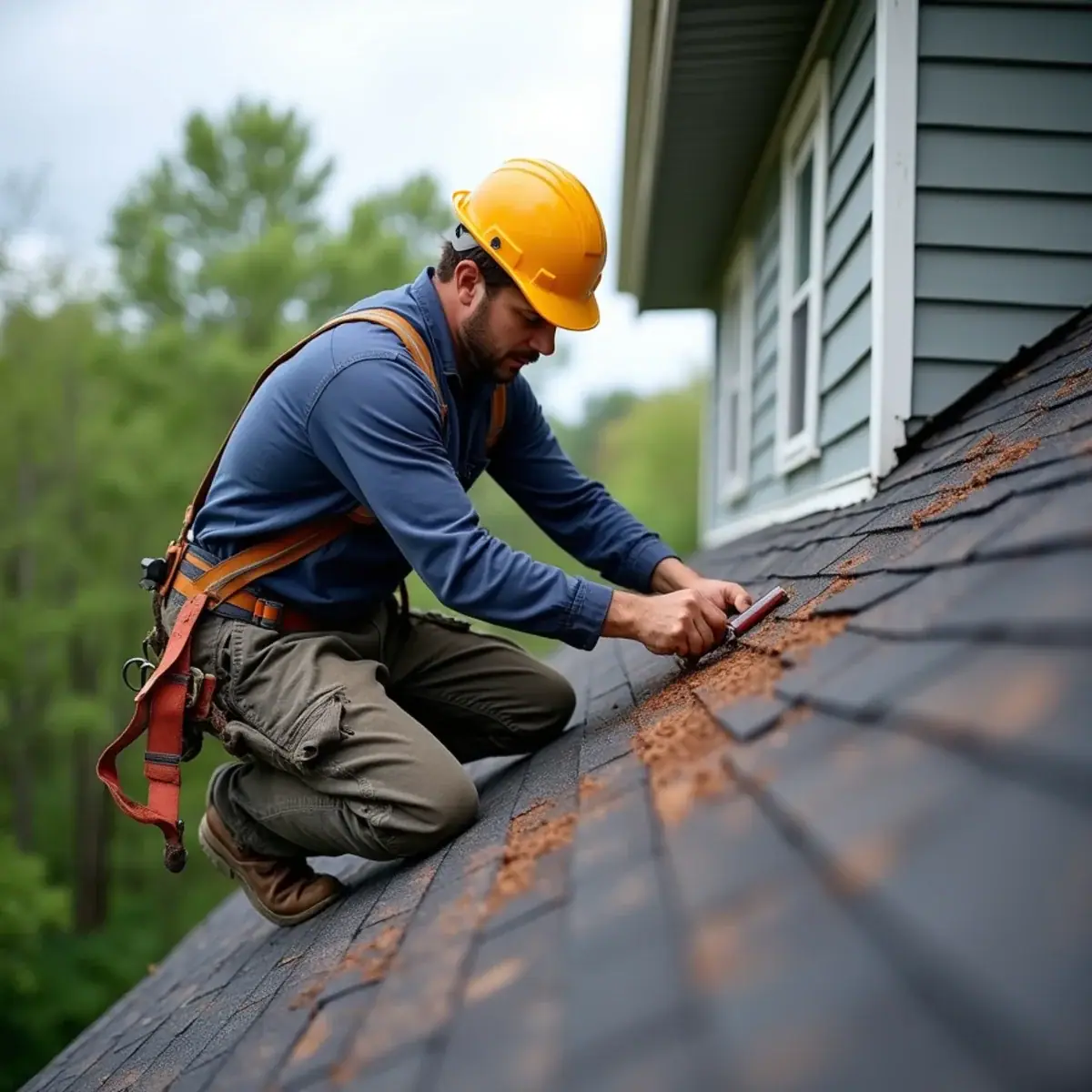
Where a roof slope meets a wall, small L-shaped pieces of step flashing tuck under each shingle and behind the siding. If a piece is missing, rusted or was face-nailed and caulked instead, wind-driven rain gets behind it. These leaks often show up on one wall only when the wind comes from one direction.
3. Cracked pipe boots
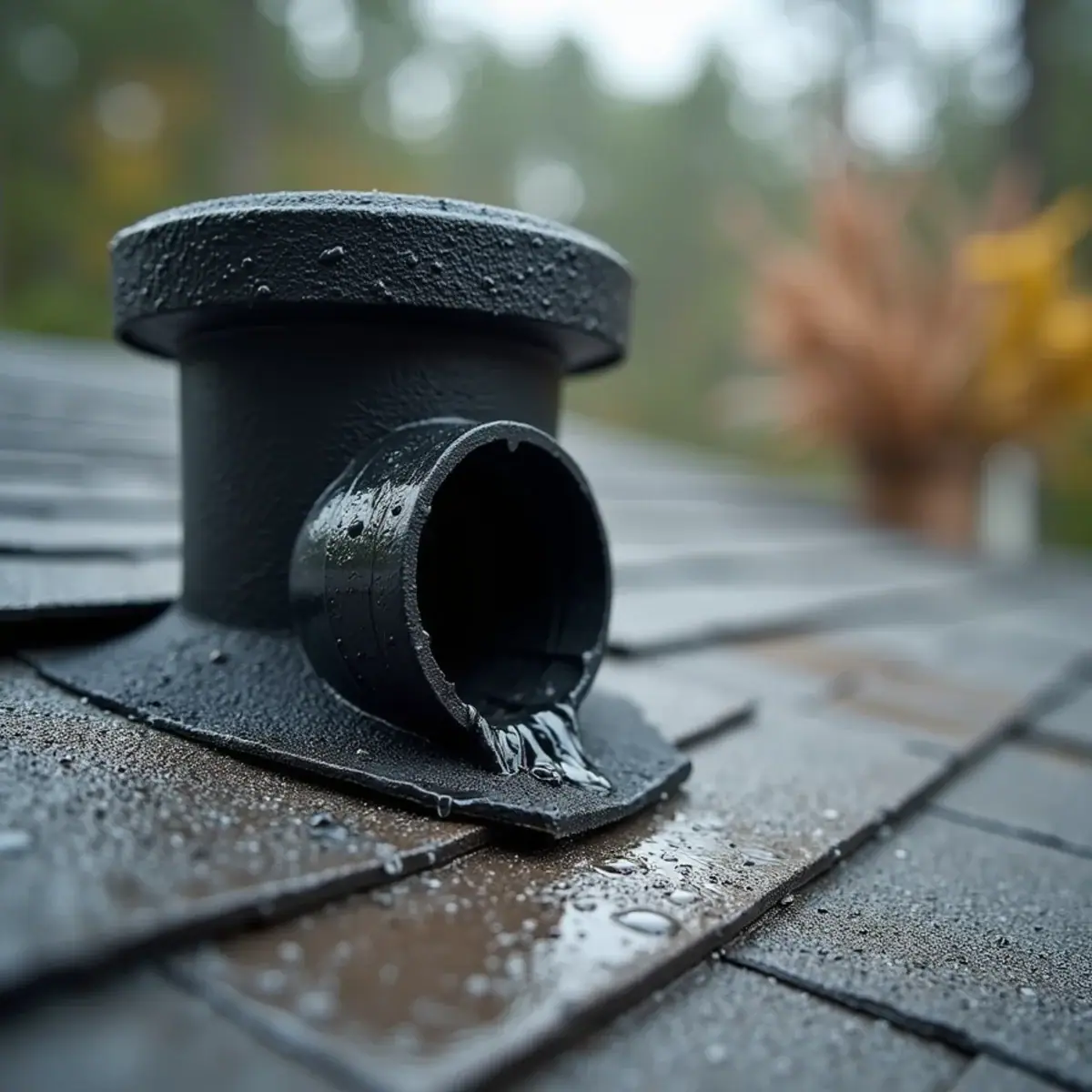
Rubber pipe boots often crack in roughly 10 to 15 years of Arkansas sun. A small split may stay dry in a light shower but let water run down the pipe in a downpour, landing in a bathroom or hallway ceiling.
4. Chimney and counter flashing
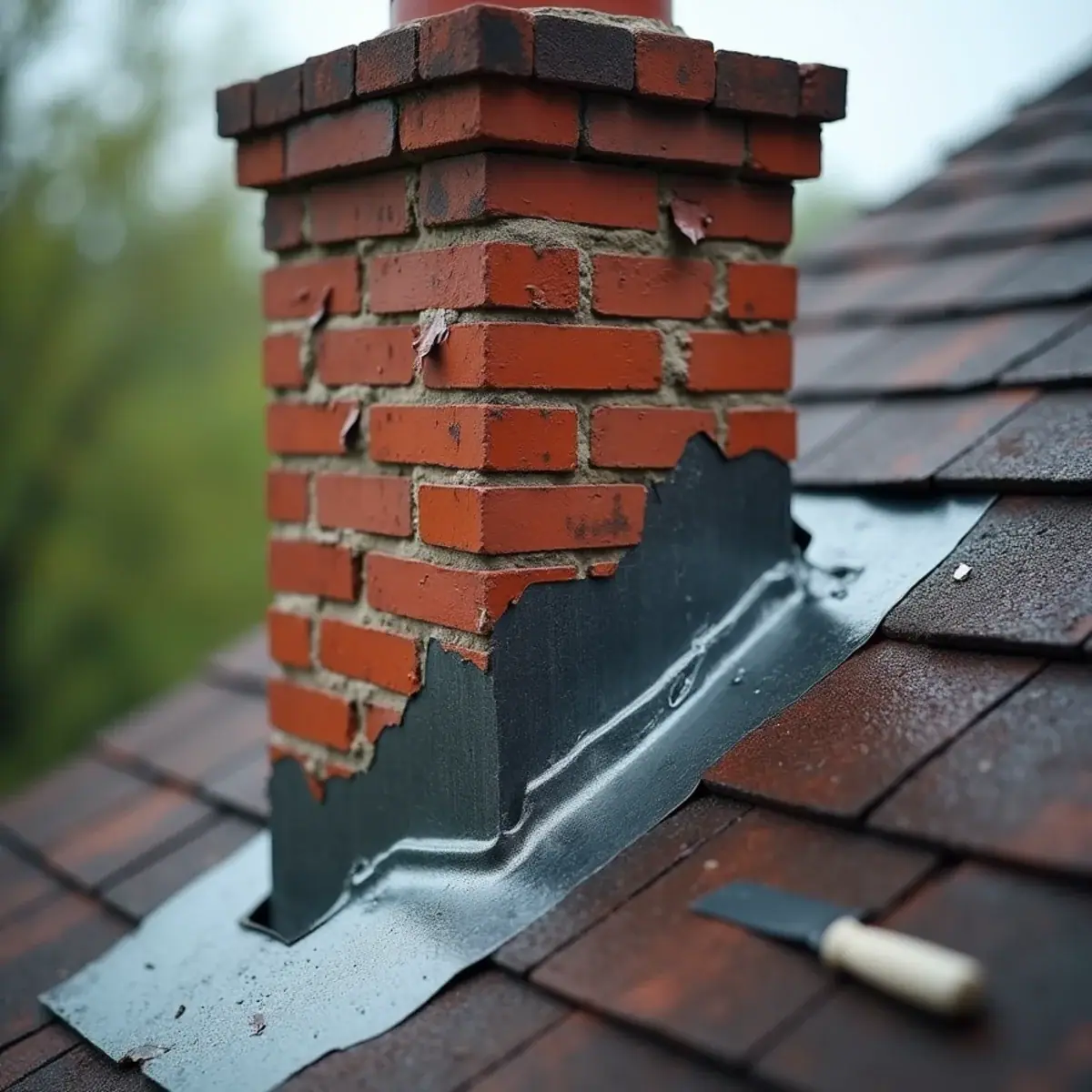
Masonry chimneys need step flashing at the shingles and counter flashing set into the mortar above it. On older homes the counter flashing is often held on by caulk that has dried and split. Heavy rain running down the brick finds the gap.
5. Backed-up gutters and missing kick-out flashing
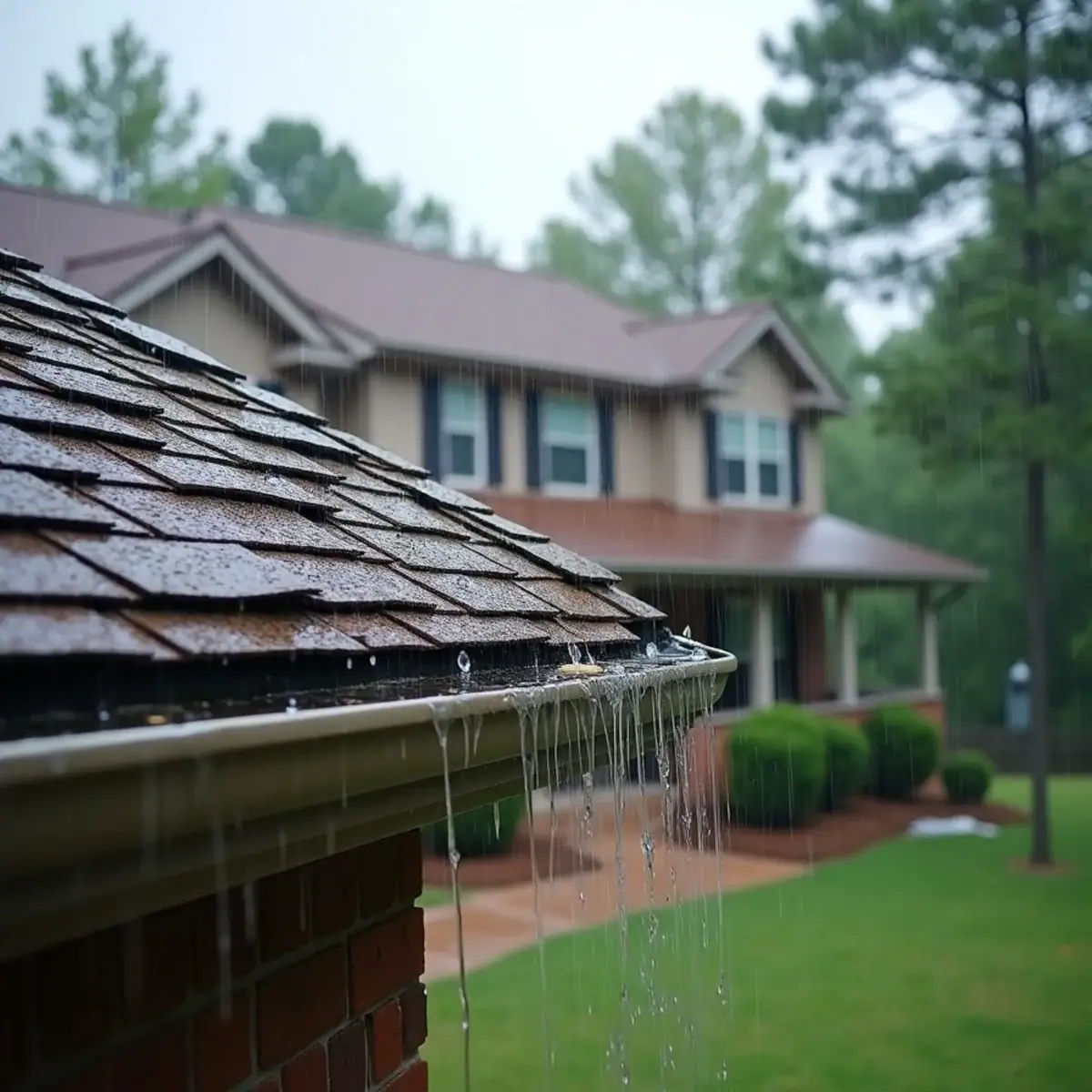
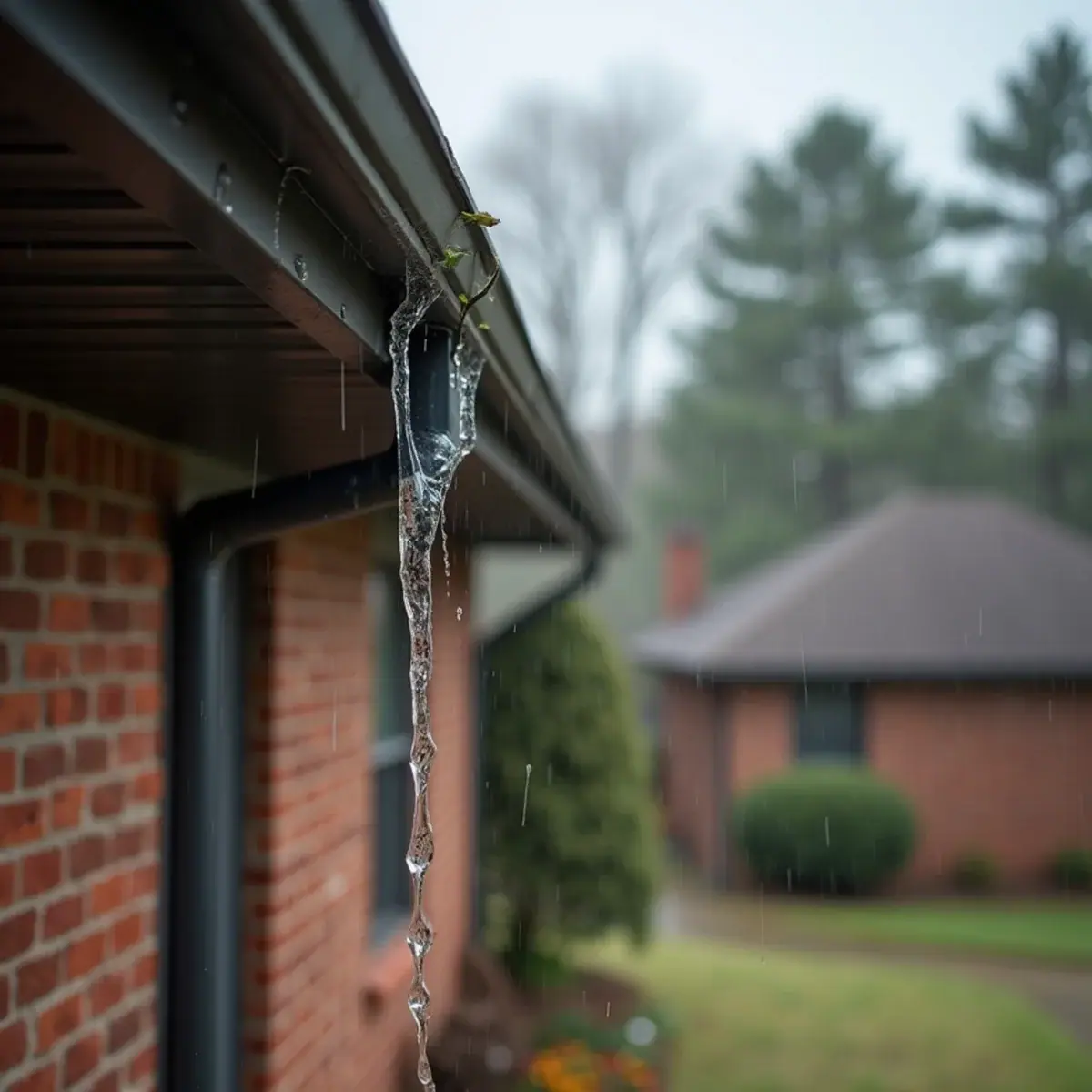
When a gutter overflows at the eave, water can wick back under the first course of shingles and rot the decking edge or fascia. Where a roof edge dies into a wall, a missing kick-out flashing sends a hard rain straight into the wall instead of the gutter.
6. Lifted shingles and failed seal strips
Each shingle is glued to the one below by a sealant strip. Once those strips let go, or a backed-out nail lifts a shingle, wind lifts the tab and rain blows underneath. This is a standard first leak on 15 to 25-year-old builder roofs.

7. Low-slope sections and tie-ins
Porch roofs, additions and shed dormers are often built flatter than the main roof. Standard shingles need a minimum slope to shed water, and where a flatter roof ties into a steeper one, a heavy rain can back up and push under the laps.
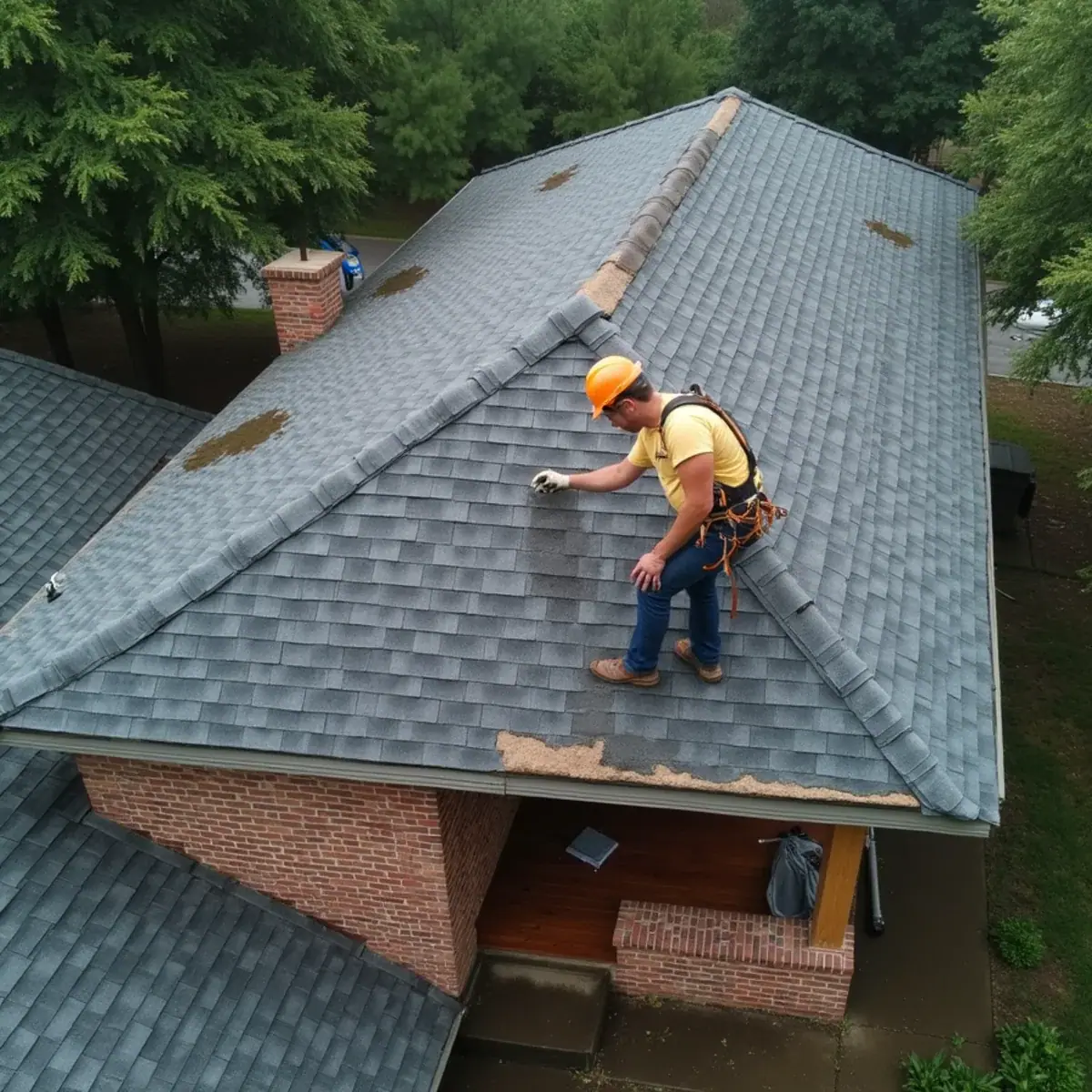
Why does the stain show up hours after the heavy rain stops?
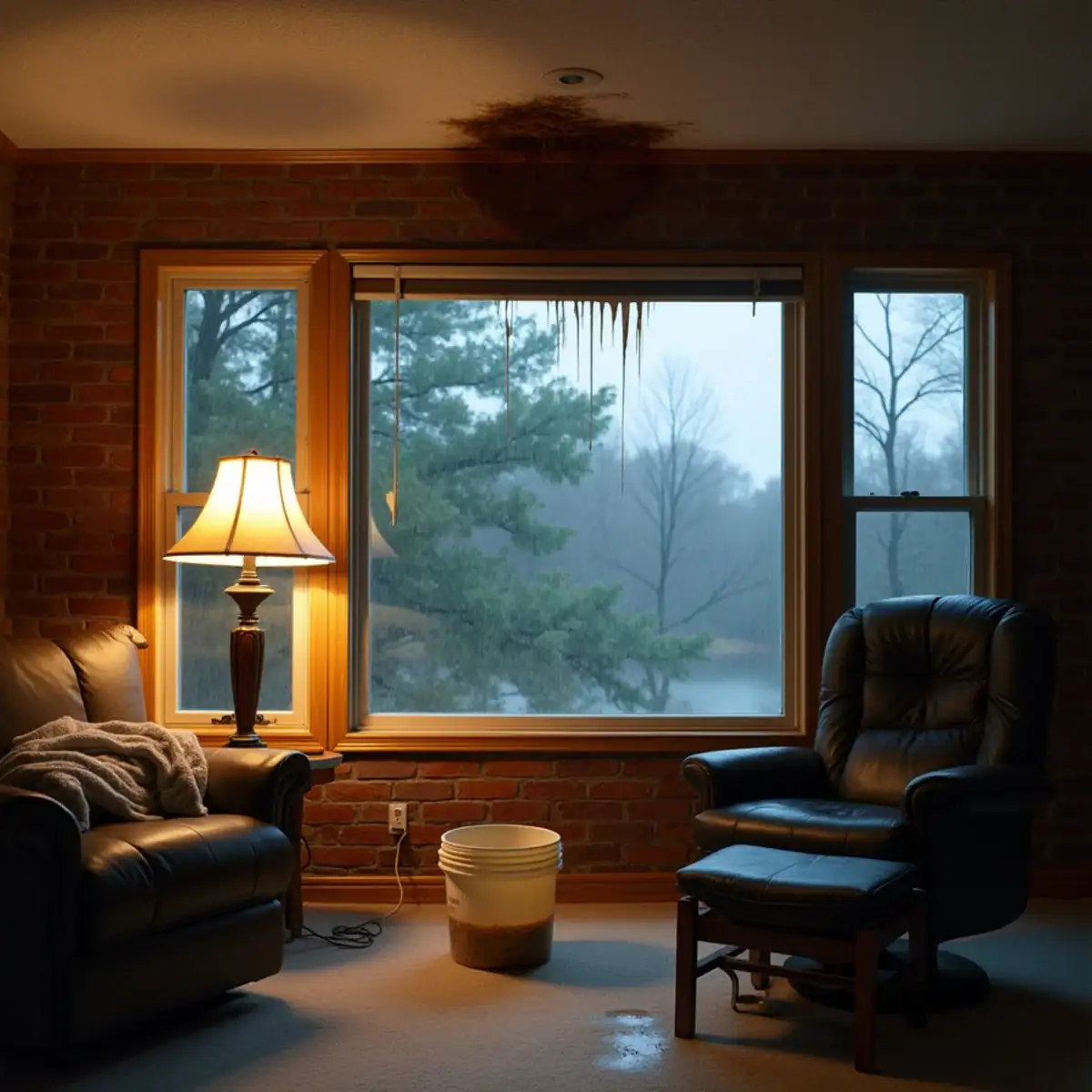
A stain that appears the morning after is usually the same leak on a delay. Water that gets past the shingles runs downhill along the decking and rafters and soaks into the attic insulation, which holds a lot of water before any reaches the drywall.
- Light rain: a few drops soak into the insulation and dry out, so the ceiling stays clean.
- Heavy rain: the insulation fills up and the stain shows, sometimes hours after the rain has passed.
- Repeat downpours: a ring that grows a little after each one is a leak that has been running for a while.
In Little Rock humidity, wet wood above a dry-looking ceiling can stay damp for days; if the plywood along the trail is soft, the job may include roof decking repair. A damp attic during a dry spell is usually condensation, covered in what causes a ceiling water stain.
How to narrow it down from inside the house
You can save the roofer a lot of searching by keeping notes the next time it rains hard:
- Which room and which part of the ceiling. A drip near an outside wall suggests flashing or the eave. One near a bathroom points to a pipe boot.
- How long into the rain. A leak that starts within minutes often means a direct opening. One that appears an hour in suggests a valley or gutter filling up.
- Wind direction. If it only leaks in rain from the west or south, the problem likely faces that way.
- What the attic shows. With a flashlight, look for dark streaks on the decking, rusty nails and wet insulation, and photograph them.
A written log beats memory. Add a line after every hard rain, including the dry ones:
| Day and time | Rain | Wind from | When the drip started | Where and how much |
|---|---|---|---|---|
| Saturday, 4 pm | Hard, about an hour | South, gusty | About 40 minutes in | Hall ceiling by the bath fan, steady drip |
| Tuesday, 7 am | Steady all morning | Calm | No drip | Dry, ring the same size |
If it leaks only with rain from one side, that slope or wall is the suspect. If it leaks in any hard rain, calm or gusty, suspect volume: a valley, gutter or low-slope tie-in.
How a roofer confirms the source
Because a hard-rain leak may not show on a dry day, a roofer works in a specific order:
- Attic first. Find the water trail on the decking and rafters and follow it to its highest point.
- Roof directly uphill. Check the valleys, flashing, pipe boots and shingle seals along that line.
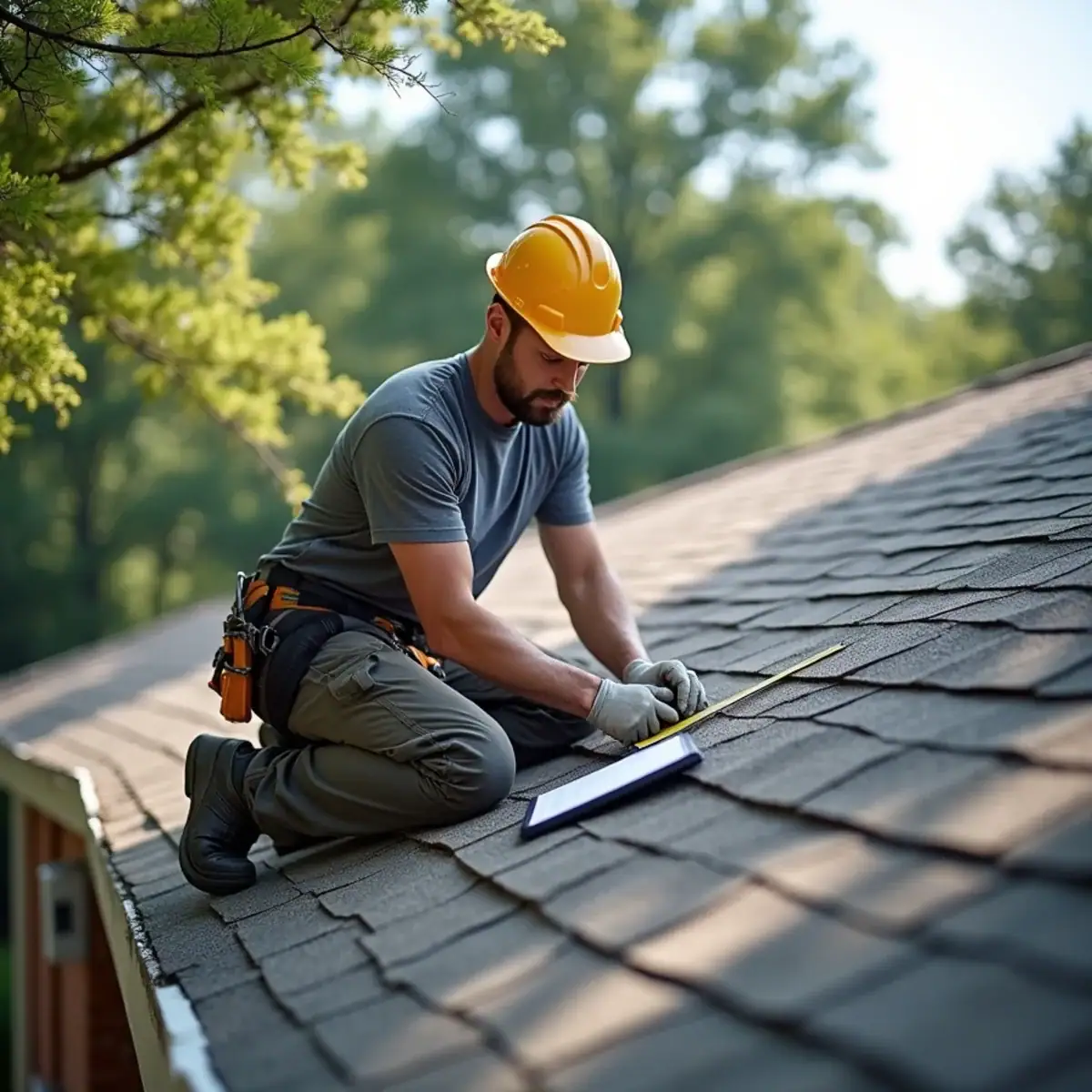
- Water test if needed. One person runs a hose on a single section, starting low and working up, while another watches the attic. It takes patience, but it beats patching the wrong spot.
Flashing problems are among the most common results, and our roof flashing and chimney leak repair page explains how step flashing, counter flashing and pipe boots are rebuilt so they hold. For leaks at valleys, shingles and vents, see roof leak repair. If water is coming in right now, start with what to do when your roof is leaking.
What can a hose test show, and what can it miss?
A hose test is useful, but it is not a downpour, and a dry test does not prove a dry roof.
- What it does well: it can confirm a cracked pipe boot, a valley that leaks under volume or a gap in chimney flashing.
- What it can't copy: rain blown sideways across a whole slope for an hour, or gusts pushing water up under the shingle laps. A one-direction leak may stay dry during the test.
- What can mislead: spraying up under a shingle edge or soffit forces water where rain never goes and can produce a false leak. A careful test runs water down the slope.
When a test comes up dry, the roofer leans on the attic trail and your log, and rules out sources that aren't the roof. A stain right at a window head can come from window or wall flashing, and a good roofer will say so instead of patching shingles that aren't leaking.
What roofers see on Little Rock roofs
Two patterns come up again and again. On older homes in Hillcrest and the Heights, hard-rain leaks are usually flashing: chimneys and wall junctions that have been caulked over for years instead of rebuilt. On newer subdivision roofs, it is more often lifted shingles and pipe boots.
Bryant shows the second pattern clearly. The city grew fast after 2000, so many roofs there are original builder-grade shingles now 15 to 25 years old. That is the age when seal strips let go, nails back out and the first boot cracks. A Bryant homeowner may go years with a dry ceiling and then get a stain after one wind-driven downpour. The roofers who handle shingle roof repair in Bryant often find a row of unsealed tabs on the windward slope and a split boot on the same trip.
The useful lesson: an intermittent leak is still a leak. Each heavy rain wets the decking a little more, and in our humidity it rarely dries out completely before the next one.
Quick answers
Why does my roof leak only when it rains hard?
Because the weak spot only opens under pressure. Light rain runs straight down the shingles, but a downpour overloads valleys and gutters, and wind pushes water sideways under lifted shingles and behind flashing. A small gap that stays dry most of the year can let in a surprising amount of water during a heavy band of rain.
Can a roofer find an intermittent leak on a dry day?
Usually, yes. The attic often shows a water trail, stained decking or rusty nails that lead back to the source. If the trail is not clear, the roofer can run a controlled water test, wetting one section of roof at a time while someone watches inside. Your notes on wind direction and timing make it much faster.
Is a leak that stops after the rain still worth fixing?
Yes, it is. Every heavy rain soaks the decking, insulation and drywall a bit more, and in Central Arkansas humidity that moisture can lead to rot and mold long before the ceiling looks bad. A repair made while the problem is small is usually simpler than one made after the wood underneath has softened.
Why does my roof only leak when rain comes from one direction?
Because only that side is getting rain pushed sideways into it. Missing step flashing, unsealed shingle tabs or a gap at a chimney can stay dry in calm rain and open up when gusts drive water against them. Note the direction each time; it tells the roofer which slope or wall to check first.
Have the source found while the roof is dry
A leak that only shows up in heavy rain is easier to fix on a dry day, before the next downpour finds the same gap. The roofer we send traces the water from the attic to the roof, shows you what failed, and gives you a written estimate before any work starts. Every roofer we send is licensed and insured in Arkansas. Call (773) 207-0769, answering 24/7.