
Quick answer
Most roof valley leaks start with debris, not old age. Pine needles and oak leaves dam the valley, water backs up under the shingles, and it finds nails set too close to the valley center or worn lining underneath. The fix is clearing the valley, then repairing the shingles, metal or underlayment that let water through.
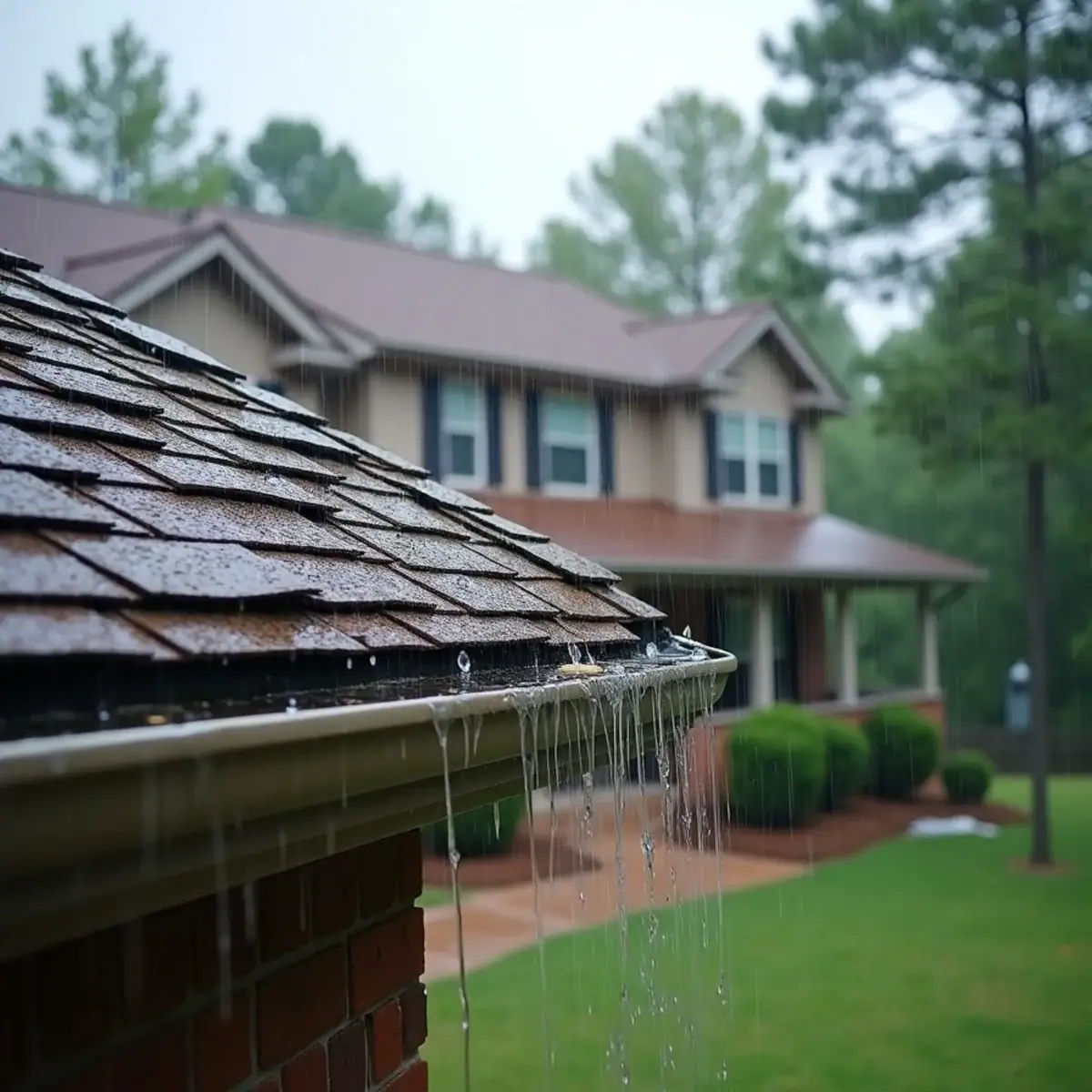
A roof valley leak usually happens because the valley is carrying more water than it can shed, or because something under the shingles in the valley has worn through. A valley is the inside corner where two roof slopes meet, and it drains both of them at once, so it handles more water than any other part of the roof. On wooded lots around Little Rock, leaves and pine needles pile up there, slow the flow and push water sideways under the shingle edges. Clear the debris first, then have a roofer check the valley's nails, metal and underlayment.
Two areas call about this more than most. In Maumelle, many homes sit among the city's wooded greenbelts under pines that drop needles all year. In North Little Rock, Park Hill and Lakewood streets are shaded by mature oaks that fill valleys every fall. Below is how each valley style fails, what causes the leak and how it gets fixed.
Open, closed-cut and woven valleys: how each one fails
Stand in the yard and look at the inside corners of your roof. One of three styles will be there, and each has its own weak point.
Open valleys
A strip of metal runs down the center, left exposed, with the shingles trimmed back a few inches on each side. Water rides on the metal. On older roofs the metal can rust or pinhole, and debris sitting on a bare metal channel spills water over the shingle edges. Nails driven too close to the center of the metal also open holes where the flow is heaviest.
Closed-cut valleys
Shingles from one slope run across the valley and up the other side. Shingles from the second slope lap over them and are cut in a straight line just off center. This is the most common style on architectural shingle roofs built since the 1990s. It leaks when nails land too close to the valley center, when the top corner of each cut shingle is not clipped (so water runs along its upper edge and turns inward), or when a steep slope pours water across the valley and under the cut edge on the shallow side.
Woven valleys
Shingles from both slopes are laced together across the valley. You mostly see this on older 3-tab roofs. As the shingles stiffen with age, they bridge across the valley instead of lying tight, crack along the fold and lose granules in the channel where water runs hardest.
| Valley style | What you see from the ground | Usual weak point |
|---|---|---|
| Open | A visible metal channel | Rusted metal, debris spilling over, nails in the channel |
| Closed-cut | Shingles meet in a straight cut line | Nails near center, unclipped corners, crossflow from a steep slope |
| Woven | Shingles interlaced across the corner | Cracked, bridging shingles and worn granules |
What causes most valley leaks on wooded lots
- Debris dams. Leaves, needles and twigs knit into a mat that holds water in the valley. Water backs up and climbs under shingle edges it would normally run past.
- Granule wear. The valley carries the most water, so it loses granules first. A pile of sand-like grit in the gutter below a valley is a clue.
- Nails in the wrong place. Shingle nails set within several inches of the valley center sit right in the flow path.
- Worn lining underneath. The underlayment or metal under the valley shingles can dry out, split or rust, so water that slips past the shingles reaches the deck.
- Valleys that end at a wall. Where a valley runs into a dormer or second-story wall, the flashing at the bottom often carries water behind siding if it is short or missing.
Several of these usually show up together. A clogged valley on a roof with well-placed nails may never leak. The same clog on a valley with nails near the center often leaks in the first long rain. Our post on why roofs leak only in heavy rain covers the same pattern on other parts of the roof.
Is something above the valley sending it extra water?
A valley is built to drain its own two slopes. On two-story and multi-gable homes, two setups often hand it more:
- An upper-roof downspout emptying onto the lower roof. In a downpour, a whole upper slope lands in one spot near the valley, scrubs off granules and runs into the valley on top of its normal load.
- A dormer or second-story wall at the top of the valley. Water off the siding pours into the head of the valley, and a short or missing flashing piece there leaks long before the rest of the valley does.
Look for a bare streak below the downspout outlet. The usual fix is extending the downspout to the lower gutter and checking the wall flashing at the valley head.
Maumelle pines and North Little Rock oaks
Maumelle was planned in 1974 and built through wooded greenbelts around Lake Willastein and Lake Valencia. Pines shed needles in every season, and the needles lock together into a dense mat that is hard for rain to wash out. Many of the larger homes have several gables and dormers, which means several valleys per roof, and shade keeps those valleys damp for days after a rain. If your home is on one of these lots, our page on roof leak repair in Maumelle covers what roofers see there most.
North Little Rock has a different problem. Park Hill homes from the 1920s to the 1950s and mid-century houses in Lakewood sit under large oaks. Oak leaves lie flat when wet and pack into valleys in late fall, and acorns roll down and lodge at the bottom. Leaks there often show up in the first long winter rains after leaf drop. Older homes may still have original open metal valleys that are near the end of their life. See shingle roof repair in North Little Rock for more on those roofs.
A typical valley call (illustrative example)
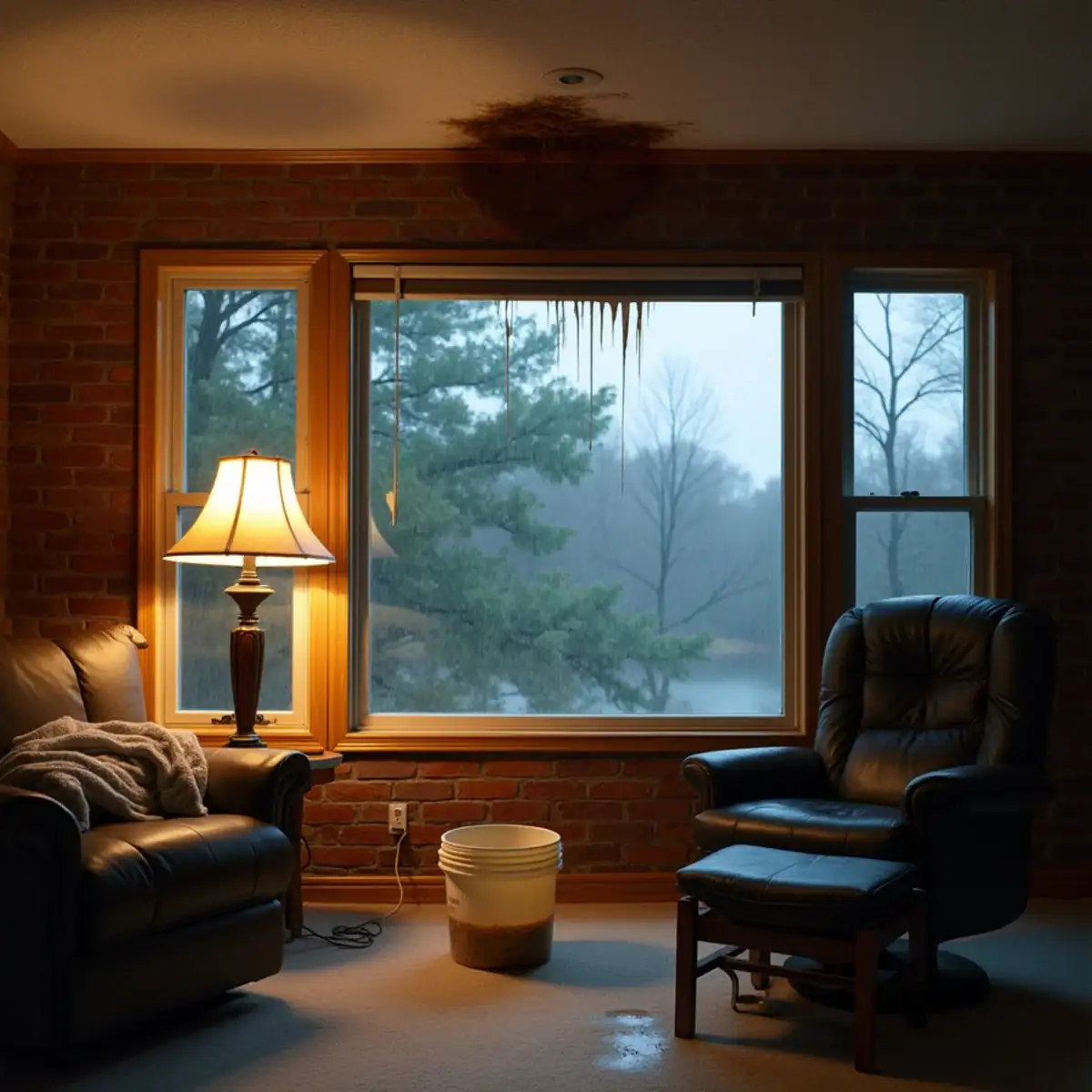
A homeowner on a wooded Maumelle lot sees a brown ring on a bedroom ceiling below where a dormer meets the main roof. From the ground the shingles look fine. On the roof, the roofer pulls a packed mat of needles out of the valley, lifts the cut shingles and finds three nails inside the flow line with dark stains around them on the underlayment.
What should be under the shingles in a valley?
Once the valley shingles are lifted, the question is what lies beneath. The residential code most U.S. towns build from, along with shingle makers' instructions, sets a few basics:
- Closed-cut and woven valleys: a lining at least 36 inches wide, such as smooth roll roofing or a self-adhering membrane (often called ice-and-water shield) that seals around nails.
- Open valleys: corrosion-resistant metal at least 24 inches wide, with each upper piece lapped over the one below.
- Nails: at least 6 inches from the valley centerline, with closed-cut shingles trimmed about 2 inches off center.
Little Rock rarely sees the ice dams that make a membrane mandatory farther north, so some older roofs here have only felt in the valleys, which dries out and leaves nail holes open. On a repair, many roofers lay fresh membrane the full width of the valley before re-shingling.
How a roofer repairs a leaking valley
- Clear the valley and the gutter below it so water can be traced, not guessed at.
- Check the attic to match the ceiling stain to a spot on the valley, measuring from a wall, vent or chimney.
- Lift the shingles along the valley to look at nail placement, the lining and the deck.
- Pull nails that sit in the flow path, replace damaged shingles and re-cut a closed valley with clipped top corners.
- Replace rusted valley metal or worn lining in the section that is opened, and repair any soft or rotted roof decking found underneath.
This work falls under roof leak repair when the problem is shingles and nails, and under valley flashing and metal repair when the metal or the valley-to-wall flashing has failed. The roofer explains which one applies and gives a written estimate before work starts.
One thing that is not a repair: a bead of sealant smeared along the cut line. It may slow a drip for a while, but it traps debris, cracks in summer heat and hides what is wrong underneath.
Why the stain is rarely right under the valley leak
Water that gets under valley shingles tends to run downhill along the valley rafter before it drips. So the stain on the ceiling usually sits lower on the roof than the actual entry point, sometimes by several feet. A roofer who patches the shingles directly above the stain often misses the real hole.
The better approach starts in the attic during or soon after a rain, following the wet track on the rafter or deck boards up to where it begins. If the attic is dry, a controlled hose test helps: a helper runs water on the lowest part of the valley first, then moves up a few feet at a time while someone watches inside. Starting at the bottom matters, because starting high wets everything below it and hides the source.
Trimming branches back from the roof is the other half of the fix. A valley repaired under a heavy canopy will clog again, and the roofer can point out which limbs are dropping the most into it.
Quick answers
Can pine needles really cause a roof valley leak?
Yes, they are one of the most common causes on wooded lots. Needles lock together into a mat that holds water in the valley instead of letting it drain. The trapped water backs up under shingle edges and finds any nail or worn spot in the lining. Keeping valleys clear, especially under pines in Maumelle and similar neighborhoods, prevents many of these leaks before they start.
Is a closed-cut valley more likely to leak than an open metal valley?
No, not when it is installed correctly. A closed-cut valley with nails kept well away from the center and clipped corners on the cut shingles sheds water well. Most closed valley leaks trace back to installation details or debris, not the style itself. Open metal valleys have their own weak points, such as rust on older metal and nails driven into the channel.
Can a roofer repair just one section of a valley?
Yes, in many cases. If the leak comes from a few misplaced nails or a damaged stretch of shingles, the roofer can open that section, fix the lining and nails, and close it back up with matching shingles. If the metal or lining has failed along the whole valley, redoing the full length is usually the longer-lasting repair, and the roofer should show you photos of why.
How often should valleys be cleared under trees?
Usually at least once in late fall after the leaves drop, and again in spring when pines shed heavily and oaks drop pollen and catkins. Homes under dense canopy may need it more often. If you can see debris piling up in a valley from the yard, or the gutter below a valley overflows in rain, it is time to clear it or have a roofer do it safely.
Does every roof valley need ice-and-water shield underneath?
Not always, by code. An ice barrier is required only where local officials say ice dams are a problem, and valley rules also allow roll roofing or metal. Because a self-adhering membrane seals around nails, many roofers still use it in every valley they repair.
Get a leaking valley looked at before the next long rain
A valley that leaks once will leak again in the next soaking rain, and each time water reaches the deck the repair gets bigger. Clear what you can reach safely from a ladder, take photos of any ceiling stain, and have a licensed roofer check the nails, lining and metal. Every roofer we send is licensed and insured in Arkansas. Call Little Rock Shingle Roofers at (773) 207-0769; we answer 24/7.