Quick answer
Match the stain to the weather. A stain that darkens during or after rain, sits near a chimney, vent pipe or outside wall, and stays unchanged through dry spells is usually a roof leak. One that grows on dry days points to plumbing. A summer stain near an attic air handler or ceiling vent is often condensation.
A water stain on the ceiling is a roof leak only part of the time. The fastest test is timing. If the stain spreads or darkens during or right after rain and holds steady through dry weeks, the roof is the likely source. If it grows on dry days, look at the plumbing above it. If it shows up in July near an air conditioning vent with no rain in the forecast, condensation is the strong suspect.
Little Rock gets about 50 inches of rain a year, much of it in hard downpours, and the median house here was built in 1978. That means roofs, supply lines and attic ductwork are all old enough to cause trouble. Long, sticky summers add the third suspect most homeowners never consider. Here is how to tell the three apart before you open a wall or call anyone.
Three sources, three different patterns
Each source leaves its own fingerprint. Look at when the stain changes, where it sits and what the attic above it looks like.
| Clue | Roof leak | Plumbing leak | Condensation |
|---|---|---|---|
| When it grows | During or after rain | Any time, often after showers or laundry | Hot, humid months, with the AC running |
| Where it sits | Near outside walls, chimneys, skylights, vent pipes or below valleys | Under a bathroom, kitchen or laundry room | Around ceiling registers, or under the attic air handler |
| How it looks | Brown rings that widen with each heavy rain | A steady, growing patch, sometimes soft drywall | Small spots or a halo around a vent grille |
| In the attic | Dark streaks on decking, wet insulation, drip trails on rafters | Often dry, because the pipe is in the floor or wall | Wet duct jackets, a full drain pan, damp insulation below |
Stains rarely read this cleanly, but the timing clue settles most cases. Write down the date you first saw the stain and what the weather was doing that week.
What can the stain itself tell you?
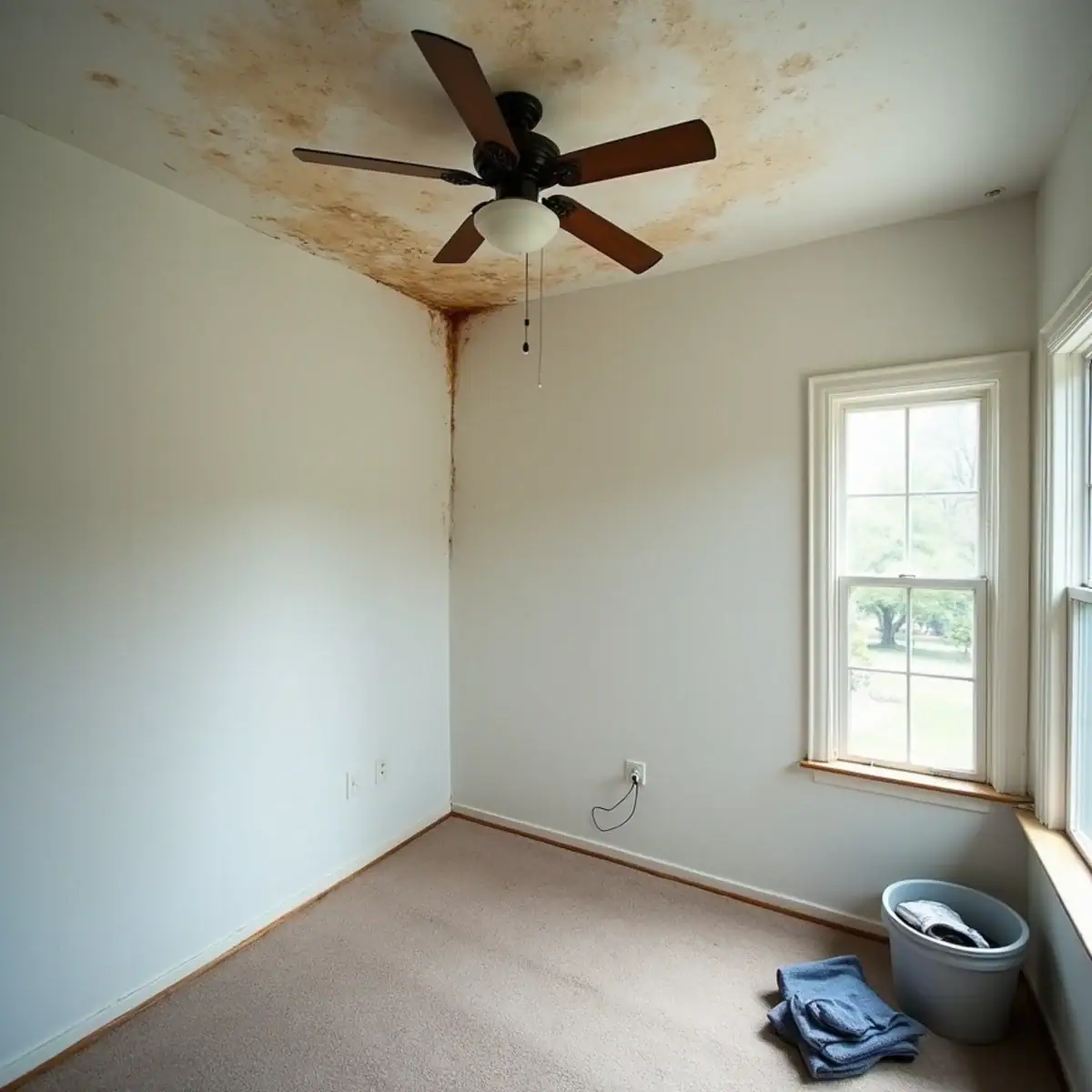
Read the stain before you hunt for the source. Its rings, color and edges show whether water is still getting in.
- Rings inside rings. Each ring marks one wet-and-dry cycle, so stacked rings mean a leak that keeps coming back.
- Yellow to brown color. Water that runs across decking and rafters picks up tannins from the wood and leaves them behind as it dries.
- Crisp or blurry edges. An old, dry stain has a sharp border. An active one has a soft, spreading edge, and the paint may bubble.
- Cool or soft to the touch. A spot that feels cooler than the ceiling around it is holding moisture. Drywall that gives under a fingertip needs attention soon.
A pin moisture meter settles it: a higher reading at the stain than on dry ceiling nearby, a day after rain, means the leak is still active.
Signs the stain is coming from the roof
Roof water enters at a weak point and then travels. It runs down the underside of the decking or along a rafter before it drips, so the stain can sit several feet downhill from where water gets in. Even so, roof stains cluster in predictable spots.
- Along an exterior wall, where water runs down the deck to the lowest point above the ceiling
- Near a chimney, skylight or plumbing vent stack, where flashing or a rubber pipe boot has failed
- Below a valley, where two roof slopes meet and carry a lot of water
- Only after rain from one direction, which points to wind-driven water at a wall or flashing joint
- Tide rings that add a new layer with each heavy rain
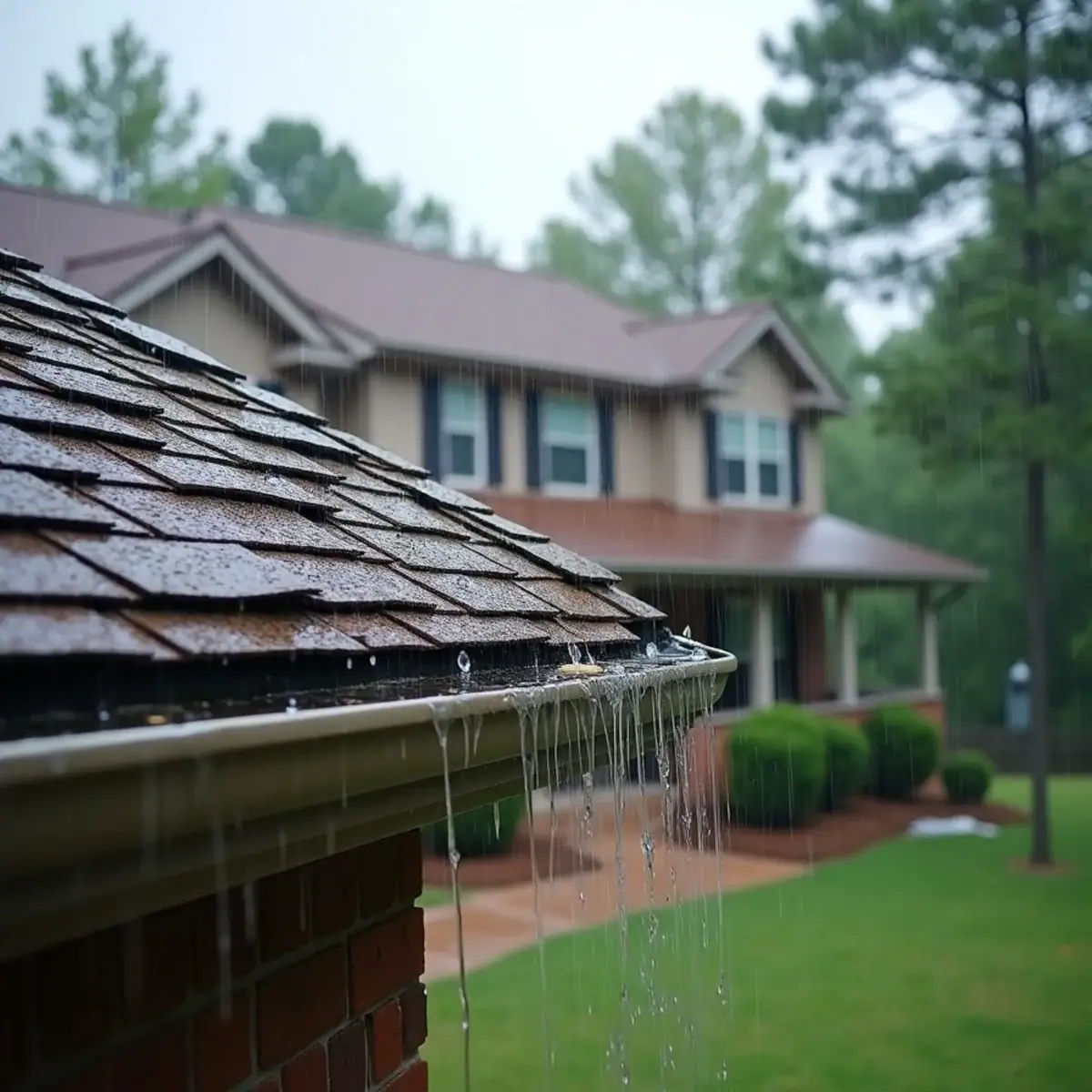
On Little Rock roofs, the usual culprits are a cracked pipe boot, worn flashing at a chimney or wall, or a nail that has backed up through a shingle. A roof leak repair starts by finding which one it is, and when the entry point is a chimney, wall or vent, the fix is roof flashing and pipe boot repair rather than new shingles. Stains below the hall bathroom are so often a failed boot that we wrote a whole guide on why pipe boots leak in Arkansas heat.
Signs it is plumbing instead
If there is a bathroom, kitchen or laundry room directly above the stain on a two-story house, plumbing moves to the top of the list. Supply lines are under pressure all the time, so a supply leak keeps growing regardless of weather. Drain leaks show up only when the fixture is used.
- Run the fixture above the stain. Fill and drain the tub, run the shower for ten minutes, then check the ceiling and feel it for dampness. A shower pan or tub drain leak often shows within the hour.
- Check the water meter. Turn off every faucet and appliance, then watch the meter for 15 to 30 minutes. Many meters have a small leak indicator dial that spins when any water is moving.
- Look at the stain on a dry week. A patch that keeps spreading with no rain is almost never the roof.
Plumbing leaks belong to a plumber. If the tests point that way, a roofer cannot fix it, and a good one will tell you so.
Condensation: the summer stain with no rain
Central Arkansas attics run very hot and very humid from June into September. Many homes here also have the furnace and air handler in the attic. Put cold equipment in hot, wet air and water forms, which is why a stain can appear in the middle of a dry spell.
Air handler drain pan overflow
The AC coil pulls gallons of water out of the air on a humid day and sends it down a condensate line. When that line clogs with algae or sludge, the water backs into the pan and spills over. The stain sits right under the unit, usually near the attic access, and grows on the hottest days.
Sweating ducts and ceiling registers
Cold supply ducts with torn or thin insulation sweat in a humid attic and drip onto the drywall. Ceiling registers can sweat too, leaving a ring around the grille. These stains follow the duct runs and fade when the weather cools.
Bath fans that empty into the attic
A bath fan that blows into the attic instead of outside fills it with warm, wet air. On cold winter nights that moisture condenses on the underside of the roof deck and drips back down. Over the years it can also soften and rot the decking.
What to do about a fresh stain today
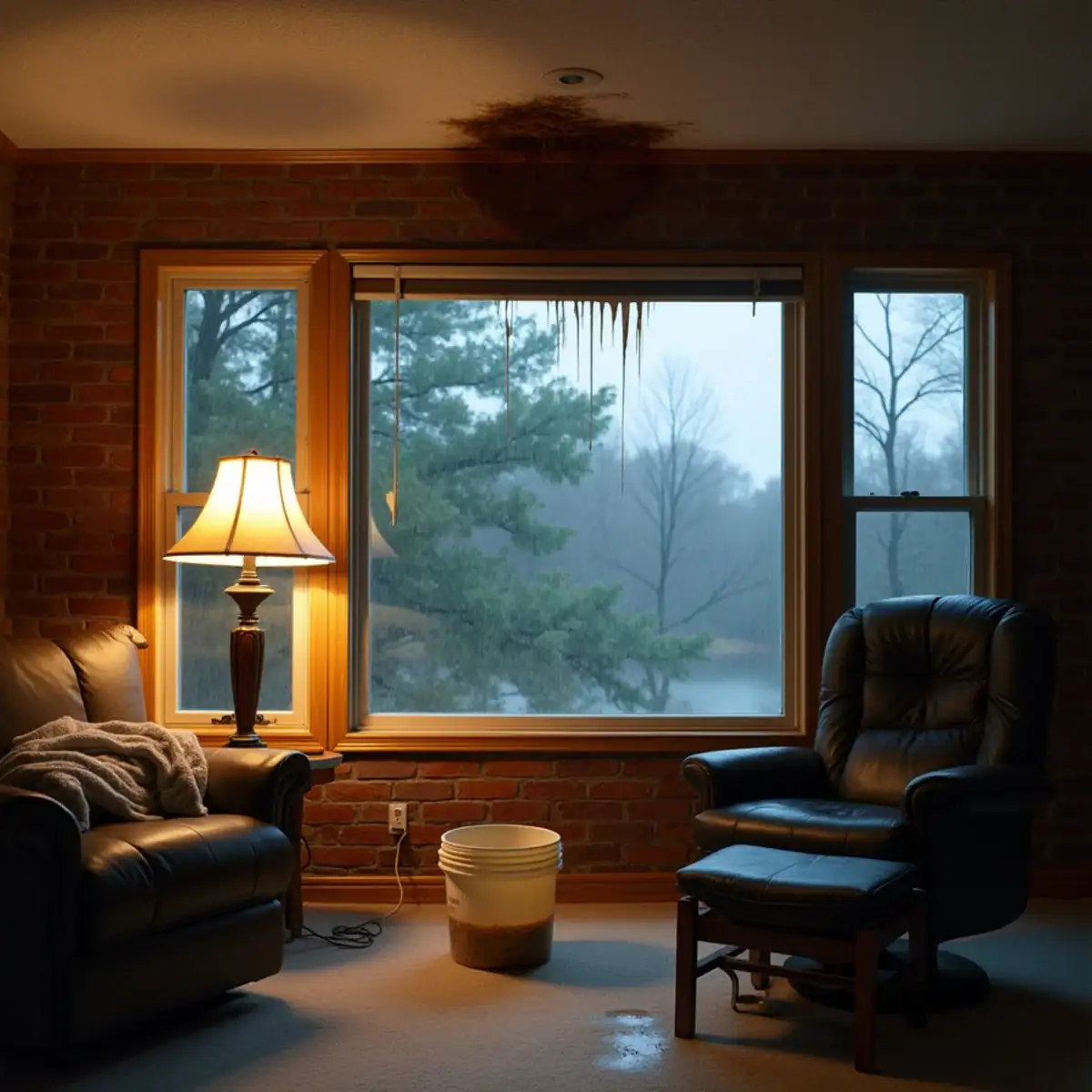
- Catch any drips with a bucket and towels, and move furniture and electronics out of the way.
- Mind the electricity. If water is near a light fixture or ceiling fan, switch off that circuit at the breaker panel.
- Relieve a bulge. If the ceiling is sagging with water, set a bucket under it and poke a small hole at the lowest point with a screwdriver. A controlled drain beats a ceiling that lets go on its own.
- Mark and date the edge of the stain in pencil and take a photo. If it grows past the line after the next rain, you have your answer.
- Look in the attic with a flashlight during or just after rain, stepping only on the joists.
- Do not paint yet. Wait until the source is fixed and the drywall is dry, then use a stain-blocking primer.
How do you repair the ceiling once the leak is fixed?
Wait until the source is repaired and the stain has stayed put through one hard rain. In Little Rock that test rarely takes long.
- Check the insulation above it. Soaked or matted insulation holds water against the drywall and should be replaced. If the decking above feels soft, ask about roof decking repair.
- Decide whether the drywall stays. Firm drywall that dried within a day or two can usually be sealed. Cut it out if it sags, crumbles, smells musty, or stayed wet past the 24 to 48 hours the EPA gives before mold can start.
- Let it dry all the way. Run a fan or dehumidifier for several days, until a meter reads the same at the stain as around it.
- Use a shellac or oil-based stain blocker. Latex paint re-wets the stain and pulls the brown back through. Prime the mark, then paint the whole ceiling so the patch blends.
From the attic: how roofers trace a stain to its source
A good roofer starts inside, not on the roof. In the attic, the trail usually shows as darker wood or a faint water line on the decking and rafters, and following it uphill leads toward the entry point. The spot directly above the stain is often dry, which is why patching shingles straight over a stain so often fails.
In Sherwood's 1970s to 2000s subdivisions, most roofs are on their second set of shingles, and a common call goes like this: a brown ring on the hallway ceiling, the homeowner sure it is the bathroom plumbing, and the attic showing a wet trail down the plumbing vent pipe. The rubber boot on top has split in the sun. It is a small repair once found, and roof leak repair in Sherwood is mostly calls like that one.
When the attic is inconclusive, the roofer may run a hose test with a helper inside: wet the lowest suspect area first, wait, then work uphill one section at a time. It takes patience, but it finds leaks that only show in a hard rain.
Quick answers
Will a ceiling water stain go away once it dries?
No, the brown ring stays even after the drywall dries, because the water carries minerals and dirt that set into the paper and paint. The stain also tells you nothing about whether the leak has stopped. Fix the source first, let the drywall dry for a few days, then seal the spot with a stain-blocking primer before painting, or the ring will bleed through ordinary paint.
Is a small ceiling stain an emergency?
Not usually, but it should not wait for months either. A small, dry stain that does not grow can be looked at on a normal schedule. Treat it as urgent if the ceiling sags, drips steadily, sits near a light fixture, or doubles in size after one rain. Slow leaks are the ones that quietly rot decking and soak attic insulation over a few seasons.
Why does my ceiling stain only show up in summer?
A stain that appears in hot, dry weeks and fades in fall is usually condensation, not the roof. The two common causes in Central Arkansas are an attic air handler whose drain line has clogged and overflowed its pan, and cold supply ducts sweating in humid attic air. An HVAC technician handles both. If the summer stain also grows after rain, have a roofer check the roof as well.
Can a roof leak show up far from where the water gets in?
Yes, water often enters at one spot and runs along the underside of the decking or down a rafter before it drips onto the ceiling. The stain can sit several feet downhill from the actual entry point, and on long rafters even farther. That is why roofers trace the water trail in the attic first instead of patching the shingles directly above the stain.
Find the source before you fix the ceiling
Timing, location and the attic tell most of the story: rain-linked stains near walls, chimneys and vent pipes are the roof, dry-weather stains under bathrooms are plumbing, and summer spots near ducts or the air handler are condensation. If it points to the roof, call Little Rock Shingle Roofers at (773) 207-0769. We answer 24/7 and send a licensed roofer to trace the leak and give you a written estimate before any work starts. Every roofer we send is licensed and insured in Arkansas.