Quick answer
Only tarp a leaking roof yourself if it is dry, daylight, calm, low-pitched, clear of power lines and you have a second person holding the ladder. Run the tarp over the ridge, wrap its edges around 2x4 boards, screw the boards down and keep fasteners out of the open tarp. Otherwise, call for emergency roof tarping.
Learning how to tarp a leaking roof starts with knowing when not to try. If the roof is wet, steep, dark, near power lines, or you are alone, stay on the ground and catch the water inside instead. If the roof is dry, low and easy to walk, and you have a helper, a tarp run over the ridge and fastened with wood boards can keep water out until a roofer makes the real repair. The steps below cover both: the hard stops first, then the method.
Falls from ladders and roofs send homeowners to the hospital after every rough night in Central Arkansas. A tarp is worth a lot less than a broken hip, so read the first section before anything else.
When not to climb: the hard stops
Any one of these is a reason to stay down and call for emergency roof tarping:
- The roof is wet, icy or covered in leaves. Wet shingles, moss and pine needles are slick, and ice is worse.
- The pitch is steep. If you cannot stand upright and walk the roof comfortably on a dry day, you cannot do it with a flapping tarp in your hands. Many pre-war Little Rock homes in Hillcrest and the Quapaw Quarter fall in this group.
- It is dark. Shadows hide the roof edge, holes and soft decking.
- There is lightning or real wind. A tarp acts like a sail, and a person on a roof is the tallest thing around.
- Power lines are near. Keep the ladder, tarp and boards well clear of the service line running to the house, and never touch a downed line or a limb lying on one.
- No second person. Someone needs to foot the ladder, pass up materials and call for help if you fall.
- It is a two-story roof. The fall distance alone is reason enough to leave it to a roofer with harnesses and anchors.
Professional roofers wait too
Licensed roofers do not climb in lightning, high wind or on ice either. The phone is answered 24/7, and how quickly a roofer reaches you depends on the hour, the weather and how many calls are open. Until then, buckets and a drained ceiling are the right tools.
What you need before you start
- A heavy-duty tarp big enough to cover the damage with room to spare and reach over the ridge to the other side, plus a few feet extra.
- 2x4 boards a little longer than the tarp is wide, at least two or three.
- Exterior screws and a cordless drill, or roofing nails and a hammer. Screws hold better and come out cleaner.
- A sturdy extension ladder that reaches a few feet past the eave, set on firm, level ground. Fiberglass is the safer choice if any wires run near the house.
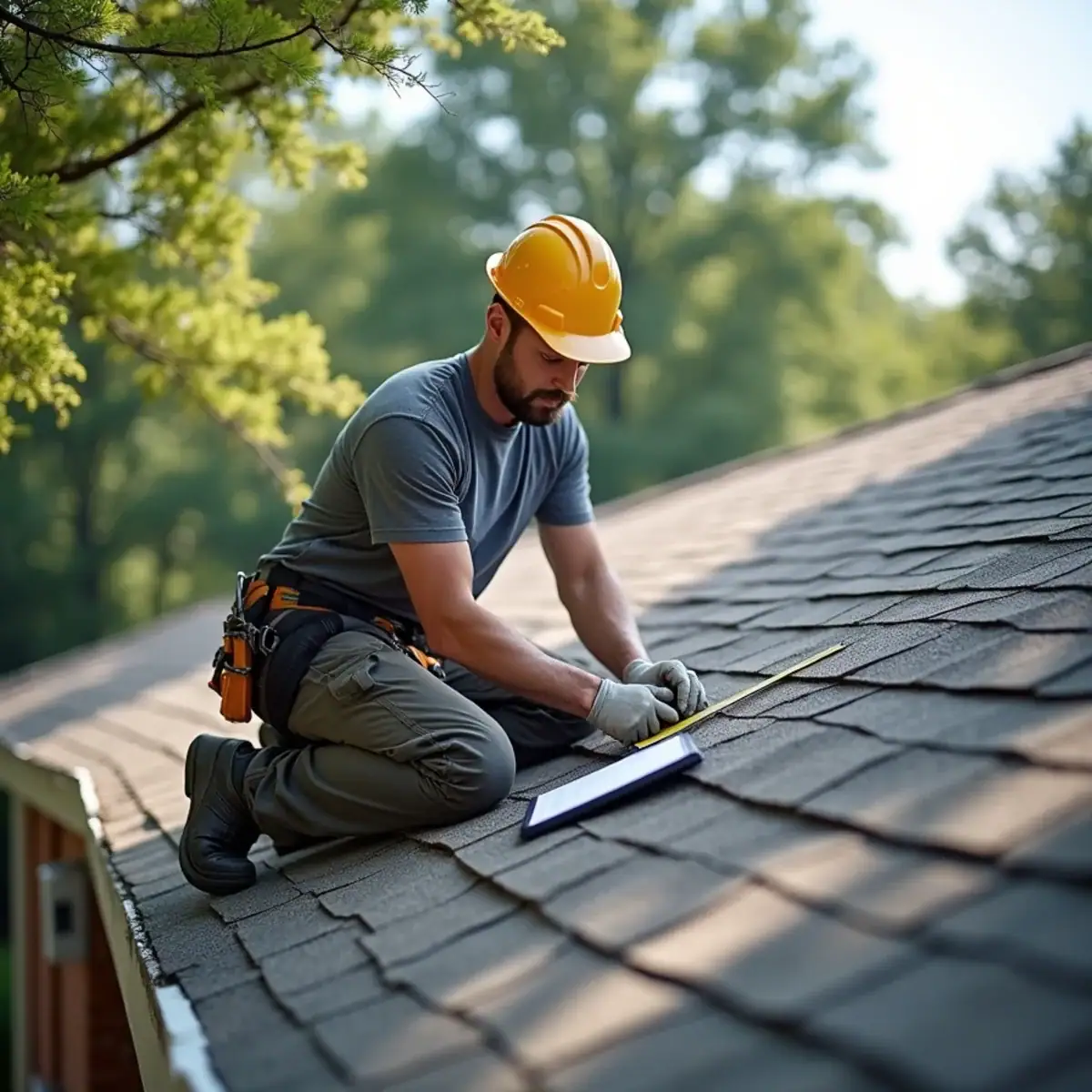
- Soft-soled shoes with good grip, gloves, safety glasses, and a harness if you have one.
- A helper and a length of rope so the tarp and boards go up after you, not in your hands on the ladder.
How to put a tarp on a roof, step by step
Only follow these steps if every hard stop above is clear.
- Find the leak from the attic first, if you can, and note where it sits relative to vents or the chimney. The tarp must cover the area uphill of the drip, not just above it.
- Clear loose debris like twigs, leaves and broken shingle pieces from the area with a broom so the tarp lies flat.
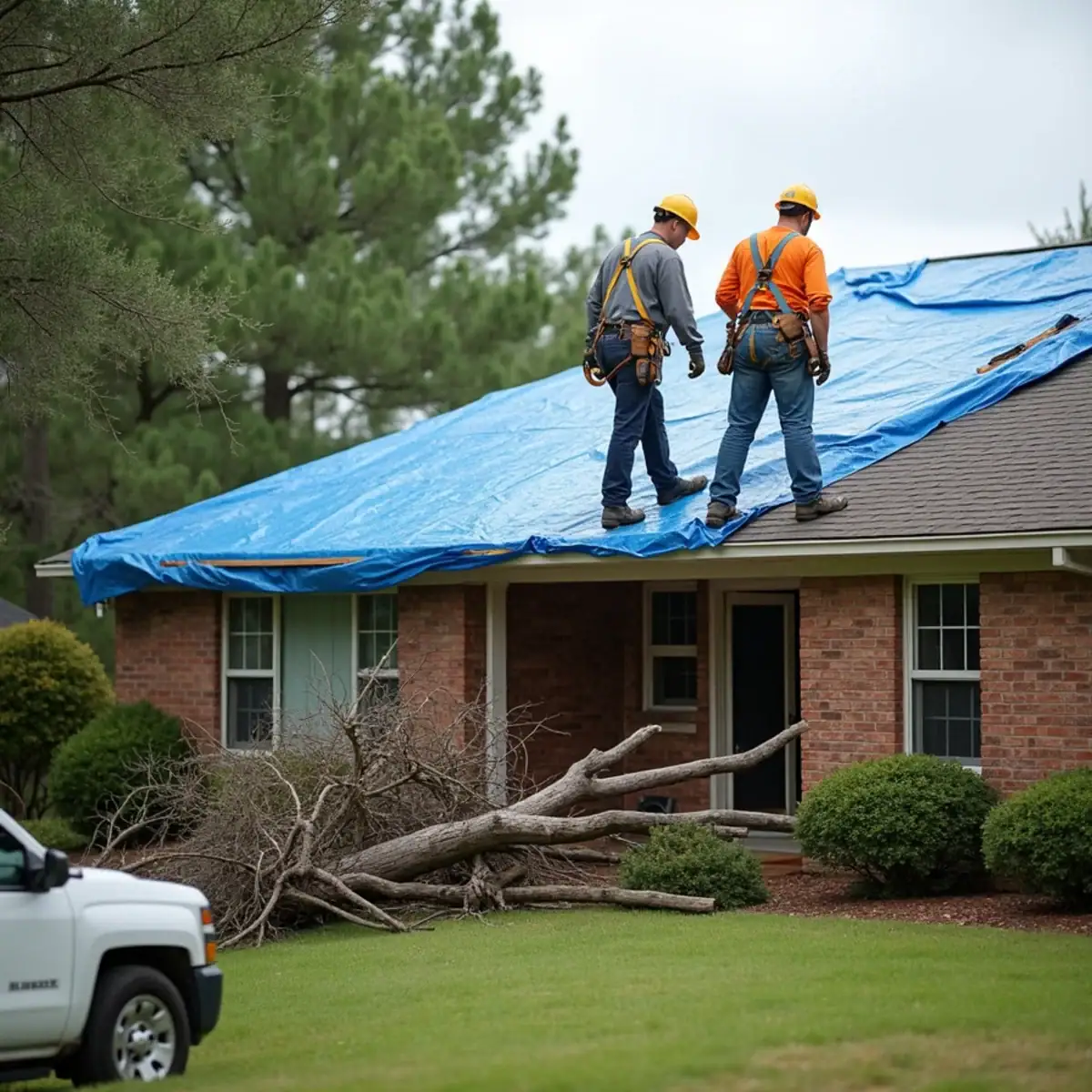
- Wrap the top edge of the tarp two or three turns around a 2x4 and screw through the wrapped board into the roof just over the ridge, on the far slope. Running over the ridge means water sheds onto the tarp, not under it.
- Roll the tarp down the slope so it covers the damage, keeping it smooth and tight.
- Wrap the bottom edge around a second 2x4 at or near the eave and screw it down. Add boards along the sides on bigger tarps.
- Keep fasteners in the boards only. Screws through bare tarp tear out in wind and make new holes for water.
- Check it from the ground for loose corners and flapping, then check the attic in the next rain.
How do you set up a ladder to reach the roof safely?
Stepping on and off the roof is where a lot of DIY tarp jobs go wrong. Set the ladder up like this first:
- Pick firm, level footing. Not soggy lawn, mud or a flower bed, where one foot of the ladder can sink as you climb. A yard that just took a Little Rock downpour often stays soft longer than it looks.
- Use the 4-to-1 angle. For every 4 feet of height to the eave, set the base 1 foot out from the wall.
- Extend it 3 feet past the roof edge. Those top rungs give you something to hold while you step on and off.
- Keep the rails off the gutter. A standoff stabilizer rests the ladder against the roof or wall instead of a thin gutter that can dent or pull loose under your weight.
- Mind the wires. An aluminum ladder conducts electricity. Look up before you raise it and keep it well clear of the service line.
- Keep three points of contact. Two hands and a foot, or two feet and a hand, on every step. That means nothing in your hands while you climb: the helper passes the tarp and boards up once you are steady, or you pull them up on the rope.
What can you do from the ladder without stepping onto the roof?
OSHA's guidance for crews installing roof tarps says to stay off the roof whenever a task can be done from a ladder, and to clear debris with a roof rake or brush from the ground. From a ladder at the eave you can photograph torn tabs, a hole or a limb on the lower part of the roof, which tells the roofer what to bring, and scoop out a clogged gutter that is spilling water against the fascia.
What you cannot do from the ladder is tarp the damage properly. A tarp pulled up from the eave leaves its top edge in the middle of the slope, and the water running down from above goes straight under it. If the tarp cannot go over the ridge, it is not worth the climb. When the hard stops rule out roof access, the useful work is inside: buckets, plastic over furniture and a drained ceiling.
Mistakes that make the leak worse
- Stopping the tarp short of the ridge. Water runs down the slope and straight under the top edge.
- Weighing it down with bricks or sandbags. They slide off in wind and can crack shingles or fall on someone.
- Tucking the bottom edge into the gutter. It traps water at the eave instead of letting it drain off.
- Covering roof vents or plumbing stacks tight. Leave vents breathing so the attic does not trap heat and moisture.
- Leaving it up for months. Arkansas sun breaks down tarp material, and a tired tarp starts to tear and leak.
How long a temporary roof tarp lasts and what comes next
A well-fastened tarp commonly holds for a few weeks, sometimes longer, but summer heat and UV wear it down fast here. Treat it as a bridge to a repair, not the repair. Moisture can also collect under a tarp in our humidity, so the sooner the roof is fixed, the less chance of soft decking underneath. Our emergency roof repair page covers how the temporary dry-in and the permanent fix fit together.
When you call, tell the person who answers that a homeowner tarp is already up, how it is fastened and whether the attic is still taking water. A tarp on boards and run over the ridge can often stay until the roof leak repair. One held by a few nails, rocks or a short top edge typically gets redone, because it still lets water in.
What roofers see on Little Rock roofs
The most common homeowner tarp problem is not the tarp. It is the fastening. Roofers regularly pull off tarps held by a few nails through the plastic, with the top edge sitting a foot below the ridge. Water runs straight under it, and the nail holes add new leaks. The fix is always the same: boards on every edge and the top run over the ridge.
Around Jacksonville, many calls come from rental homes near Little Rock Air Force Base, often owned by service members stationed somewhere else. A tenant may throw a tarp over a leak with good intentions, but the owner cannot see it from out of state. In those cases the roofers handling roof leak and tarping calls in Jacksonville photograph the tarp and the damage so the owner knows exactly what is on the roof and what the repair involves.
If you are not sure what to do first, what to do when your roof is leaking covers the inside steps.
Quick answers
Can I tarp my roof in the rain?
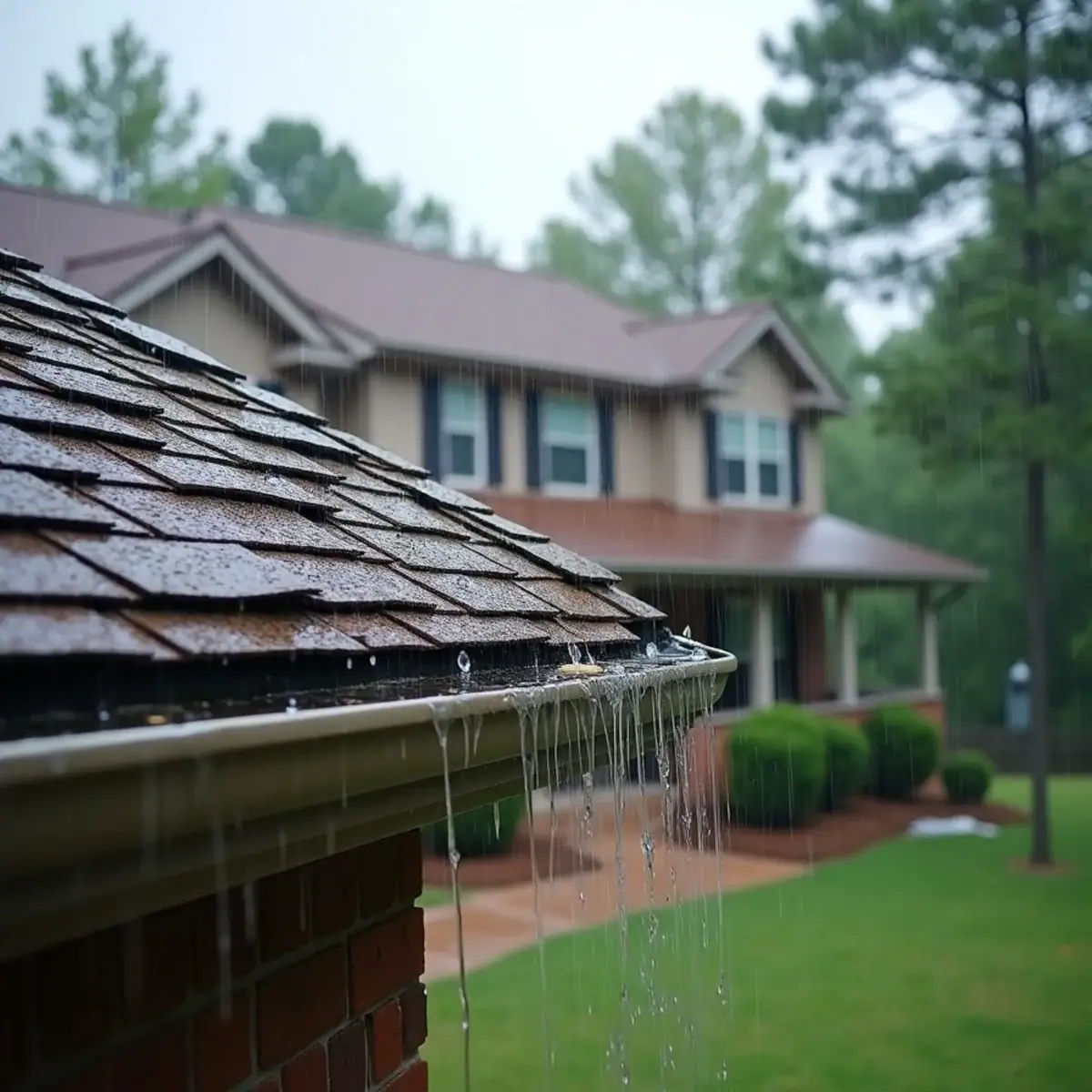
No, not safely. Wet shingles are slippery, a tarp catches wind like a sail, and rain often comes with lightning. Even in light drizzle, footing on a pitched roof is poor. Catch the water inside with buckets and plastic, drain any sagging ceiling, and wait for a dry, calm window or call for a roofer who has harnesses and anchors.
Should I nail the tarp directly to the shingles?
No. Nails or screws through the bare tarp tear out in wind and leave holes in the roof. Wrap the tarp edges around 2x4 boards and fasten through the boards instead, with the top board run over the ridge to the far side. That spreads the load and keeps water flowing over the tarp, not under it.
How long will a tarp I put up myself keep the rain out?
Usually a few weeks, sometimes a couple of months if it was installed well. Arkansas sun and heat break down the tarp, and moisture can collect underneath in humid weather. Plan the permanent repair as soon as you can, because a tarp left too long often starts leaking itself and can hide soft decking spreading under it.
Will a roofer tarp my roof at night?
Yes, when it is safe. A roofer can often tarp after dark with good lighting when the roof is dry and there is no lightning or high wind. If the weather is still active, the roofer waits until it passes. The phone is answered 24/7, so you can get in line right away and keep catching the water inside.
Is it safe to walk on a roof tarp once it is installed?
No. Tarp plastic is slick even when dry and much worse wet, and it hides whatever it covers, such as a skylight, a hole or soft decking. OSHA's tarping guidance tells workers not to walk on one. Check it from the ground or a ladder at the eave, and leave anything that needs a step onto the tarp to a roofer with a harness.
When in doubt, stay on the ground and call
A tarp done right buys time. A tarp done in the rain, at night or on a steep roof can cost far more than the leak. If any hard stop applies, catch the water inside and call (773) 207-0769. We are answering 24/7 and will line up a roofer to tarp the roof as soon as conditions allow, with a written estimate before the permanent repair starts. Every roofer we send is licensed and insured in Arkansas.